New Trends in Alibaba Procurement Scams in 2026: Why Does the Risk of Falling into Traps Remain So High?
As the core channel for overseas buyers sourcing from China, Alibaba International features a massive number of registered merchants. Although the platform continues to strengthen its controls, regulatory blind spots still exist. Combined with the inherent challenges of cross-border procurement—such as significant information asymmetry, long distances, and high costs of cross-border dispute resolution—these factors allow unscrupulous merchants to exploit loopholes.
In 2026, Alibaba procurement scams exhibit three new characteristics, making novice buyers particularly vulnerable:
- Greater Disguise: Unscrupulous sellers purchase old accounts, forge credentials, and fabricate positive reviews to pose as “Gold Suppliers” or “reputable factories.” While they appear fully qualified on the surface, they are often shell companies;
- More Covert Scams: Moving away from the blatant “payment collected but no goods shipped” tactic, scammers now employ schemes such as providing highquality samples but delivering inferior bulk goods, hidden price markups, and forged certifications. Buyers often only discover the issues upon receipt or during customs clearance, making it significantly harder to seek redress;
- More Targeted Sales Tactics: Exploiting overseas buyers’ desire for low prices and authentic factory-direct products, scammers set targeted traps, using information asymmetries to lure buyers into conducting transactions offplatform and paying in full.
Even as platforms continue to tighten their rules, buyers must proactively master antifraud techniques and never blindly trust suppliers based solely on store labels or low price quotes.
8 Most Common Scams in Alibaba Procurement in 2026: A Category-by-Category Breakdown of Key Identification Points
Based on real-life dispute cases from the front lines of cross-border procurement in 2026, we have compiled 8 categories of scams that buyers are most likely to fall for. For each category, we clearly outline the core tactics, key identification points, and immediate response methods, allowing new buyers to quickly avoid these pitfalls by following our guide.
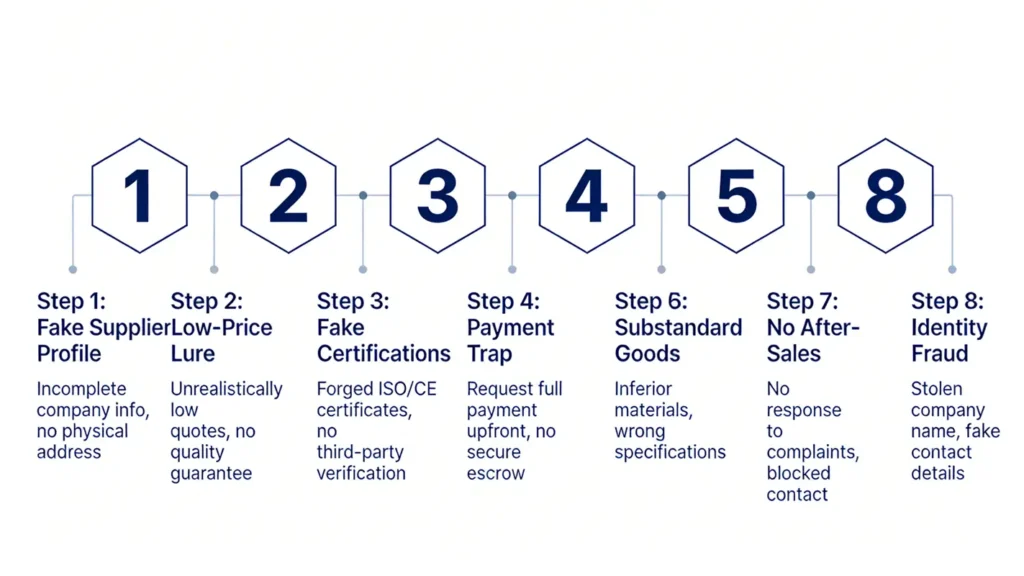
Based on real-world dispute cases from the front lines of cross-border procurement in 2026, we have compiled eight categories of the most common scams. Each category clearly outlines the core tactics, key identification points, and immediate response methods, allowing novice buyers to quickly avoid pitfalls by referring to this guide.
Scam 1: Low-Price Bait, Falsely Claiming to Be a Brand OEM or Offering Factory Surplus
Core Tactic: Suppliers focus on categories such as electronics, apparel, beauty products, and luggage, claiming to be contract manufacturers for well-known brands. They offer “factory surplus” or “OEM replicas” at prices ranging from 10% to 30% of market value, promoting the “low-price, genuine products” gimmick.
Key Identification Points: Legitimate brand contract manufacturers are bound by strict confidentiality and non-sale agreements; it is absolutely impossible for them to privately sell brand surplus stock or identical products to third parties. There are no legitimate channels for low-priced brand goods on the Alibaba platform.
Countermeasure: We recommend rejecting such suppliers outright. For brand-name purchases, always use officially authorized channels. Do not fall into traps by chasing low prices unless you verify the authenticity of the source through the brand’s official channels.
Scam 2: Deposit to Lock Prices, Then Maliciously Raising Prices After Payment
Core Tactic: During the inquiry stage, they quote prices far below market rates to quickly persuade buyers to place orders and pay a 30%–50% deposit. Once the buyer has confirmed details and invested time, they use excuses such as rising raw material costs, increased shipping fees, or failing to meet order volume targets to demand significant price hikes, while refusing to refund the deposit if the buyer refuses to pay the increased amount.
Key Indicators: Quotes lack an expiration date or detailed cost breakdown; the seller refuses to sign a formal contract and relies solely on verbal commitments via instant messaging.
Countermeasures: Compare prices from multiple sources to determine market rates; sign a formal contract specifying fixed prices, price increase clauses, and deposit refund policies.
Scam 3: High-Quality Samples, Substandard Mass Production / Mismatched Goods
Core Tactic: The sample sent meets the buyer’s requirements in terms of workmanship, materials, and specifications. Once trust is established, the supplier substitutes inferior materials, cuts corners in production, or even ships the wrong style or model during mass production. This is common in categories such as daily necessities, hardware, and apparel.
Key Identification Points: Refusing to specify in the contract that the bulk order must match the sample; claiming that “slight variations in mass production are normal”; and refusing to cooperate with pre-production and in-process inspections.
Countermeasures: Retain and seal the sample; clearly define quality standards in the contract; conduct mandatory inspections before shipment; refuse delivery and hold the supplier accountable for non-conforming goods.
Core Tactic: The shipped samples perfectly match the buyer’s requirements in terms of workmanship, materials, and specifications. Once trust is established, the manufacturer substitutes inferior materials, cuts corners on production processes, or even ships the wrong style or model during mass production. This is common in categories such as daily necessities, hardware, and apparel.
Key Identification Points: Refusing to specify in the contract that the bulk order must match the sample; claiming that “slight variations in mass production are normal”; and refusing to cooperate with pre-production and in-process inspections.
Countermeasures: Retain and seal samples; clearly define quality standards in the contract; conduct mandatory inspections before shipment; refuse delivery and hold the supplier accountable for non-conforming goods.
Scam 4: Forged Product Certifications Leading to Customs Clearance Issues
Core Tactic: For orders destined for markets such as Europe, the U.S., and Southeast
Asia, suppliers falsely claim to hold mandatory certifications for those markets (e.g., CE,
FDA, FCC, UKCA) and provide scanned copies of forged certificates created in Photoshop, despite lacking legitimate credentials.
Key indicators: Certificates lack official tracking numbers, scanned copies are blurry, and suppliers refuse to provide original certificates or official verification links.
Countermeasures: Verify authenticity through the official websites of the corresponding certification bodies. Suppliers without legitimate certifications should be immediately disqualified, unless they can provide officially verifiable expedited certification documents.
Scam 5: Luring buyers off the platform to make private transfers and abscond with the money
Core Tactic: Using excuses such as “platform fees are too high; going through offline channels is cheaper” or “deposits qualify for extra discounts,” scammers trick buyers into bypassing Alibaba’s Credit Protection orders and transferring funds to personal bank accounts, WeChat Pay, or PayPal.
Key Indicators: The seller goes to great lengths to avoid platform oversight, refuses to use the official credit protection channel, and urges you to transfer funds quickly.
Countermeasure: Firmly refuse private transfers. Ensure all transactions go through Alibaba Credit Protection orders to rely on the platform’s safeguards for fund security.
Never be swayed by the lure of lower prices offered through offline transfers.
Scam 6: Fake Credentials—Falsified “Golden Quality & Trustworthy Enterprise” or
“Established Factory” Labels
Core Tactic: Merchants display “Gold Supplier” or “Powerful Factory” labels, but these are actually obtained by purchasing old accounts or leasing credentials. They have no production facilities or supply capabilities and are merely middlemen or even shell companies.
Key Identification Points: As of 2026, the annual fee for Alibaba’s Basic Gold Supplier (Export Pass) membership starts at approximately $3,000–$6,000 (depending on region and package), with “Gold Supplier” packages costing even more. Such fraudulent stores typically feature a haphazard mix of product categories, lack real-life factory photos, and cannot provide authentic factory inspection videos; their credentials are mostly borrowed or purchased.
Countermeasures: Do not blindly trust labels; request a business license and on-site factory inspection videos to verify the company’s actual operational status.
Scam 7: Fake Shipments and Invalid Tracking Numbers
Core Tactic: After receiving payment or a deposit, the seller provides buyers with fake, expired, or third-party tracking numbers, falsely claiming the goods have been shipped, then goes offline and disappears; or the goods are only shipped domestically and are intercepted and abandoned en route.
Key Indicators: Logistics tracking numbers remain unchanged for extended periods; refusal to provide packing lists or actual shipping photos; and evasive or delaying responses when contacting the seller.
Countermeasures: Use orders with credit protection, track the logistics route in real time, and promptly file a dispute with the platform if there is no valid logistics information.
Scam 8: Unresponsive After-Sales Support and Refusal to Address Quality Issues
Core Tactic: Enthusiastically promises after-sales support before purchase; after delivery, when goods are found damaged or substandard, the seller blocks the buyer and goes offline, or refuses to take responsibility by citing “no returns or exchanges for cross-border purchases.”
Key Indicators: No clear after-sales terms; refusal to provide a written commitment regarding quality issue resolution; reliance solely on verbal assurances.
Countermeasures: Clearly define after-sales responsibilities in the contract, retain chat records, and promptly file complaints through the platform to protect your rights regarding quality issues.
Step-by-Step Guide to Avoiding Pitfalls: Building a Robust Procurement Risk Control System from Inquiry to Delivery
The key to avoiding scams in Alibaba procurement in 2026 lies in meticulous control of every step of the process. No professional experience is required; simply following these steps can significantly reduce the risk of fraud. This practical guide has been validated by a vast number of procurement cases and can be directly applied even by beginners.
3.1 Inquiry and Product Selection: Compare Prices Across Multiple Sources and
Verify Basic Qualifications
- Contact at least three suppliers to compare prices; be wary of quotes significantly below market rates—never be tempted by small savings;
- Verify the supplier’s business license, factory address, and operational status; reject unqualified, shell companies with no physical presence;
- Clearly specify requirements regarding product specifications, materials, certifications, packaging, etc., to avoid disputes later on.
3.2 Contract Signing: Clearly Define Rights and Responsibilities; Eliminate Verbal Commitments
- Require a formal quotation with an official company seal, clearly stating the price, validity period, scope of included costs, and delivery schedule;
- Sign a formal purchase contract detailing quality standards, inspection procedures, price adjustment clauses, post-sale compensation, and deposit refund policies;
- Prioritize orders processed through Alibaba Trade Assurance, which provides the most basic financial protection for cross-border procurement.
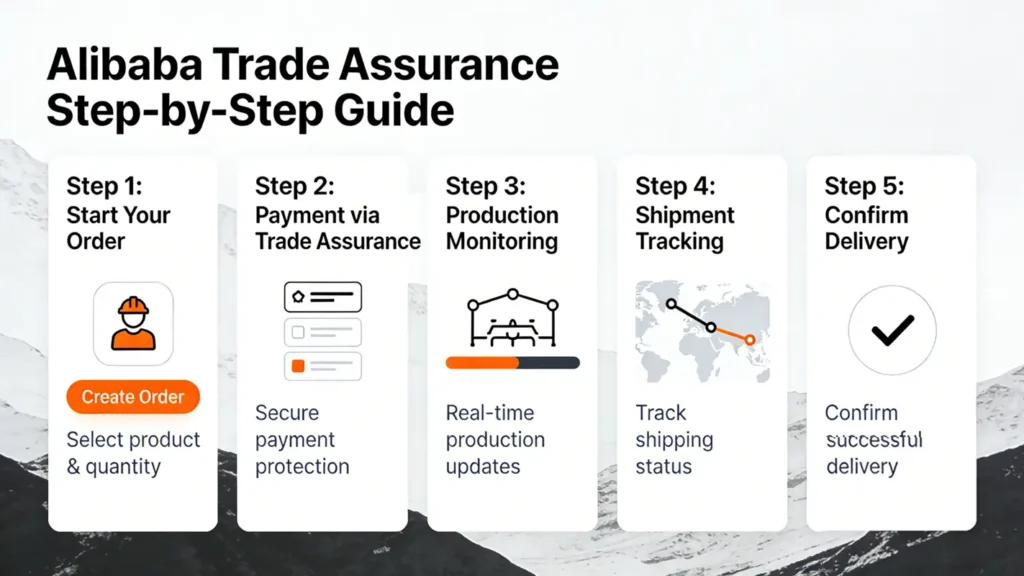
- Request a formal quotation with an official company seal, clearly stating the
price, validity period, scope of costs included, and delivery date;
- Sign a formal purchase contract that specifies quality standards, inspection rules, price adjustment clauses, post-sale compensation, and deposit refund policies;
- Prioritize Alibaba Trade Assurance orders, as this provides the most fundamental financial protection for cross-border procurement.
3.3 Inspection and Shipping: Full-process control; no payment for nonconforming goods
- After sample confirmation, seal and retain the sample as the standard for mass production acceptance, and simultaneously retain actual photos of the sample;
- Monitor the entire production process of the bulk order; require the supplier to provide video footage of production and inspection; engaging a third-party inspector is a more reliable approach;
- Arrange final payment only after inspection is passed; strictly avoid paying the full amount before inspection.
3.4 Payment and Receipt: Staged Payments, On-Site Verification
- We adopt a staged payment method of “30% deposit + 60% upon inspection approval + 10% upon receipt confirmation” to mitigate financial risk;
- Upon arrival at the port, unpack and inspect the goods on-site to verify quantity, quality, and specifications; if any issues are found, immediately gather evidence to protect your rights.
Professional Sourcing Support: Mitigating Alibaba Procurement Risks at the Source
Overseas buyers sourcing on Alibaba on their own, even if they know how to avoid scams, will still face challenges such as information gaps in cross-border trade, language and time zone differences, and difficulties in conducting on-site factory inspections—making it hard to avoid pitfalls.Compared to ordinary online procurement agents and purely online sourcing companies, Anyang Qingda Trading offers distinct advantages: We have a local operational team in Henan combined with a nationwide network of factory resources, enabling faster on-site factory inspections, qualification verification, and issue resolution. Leveraging our deep local expertise and hands-on experience, we provide secure procurement services tailored to overseas buyers. Our core advantages are as follows:
- More Reliable On-Site Verification: With deep roots in the domestic supply chain, we conduct on-site factory inspections, certification checks, and sample testing for Alibaba suppliers to weed out subpar vendors—rather than relying solely on online screening;
- No Hidden Fees Throughout the Entire Process: We provide transparent quotes and assist with price comparisons across multiple suppliers, eliminating the “low-price bait-and-switch” tactic where prices are raised later. Based on statistics from our years of service cases, we can help buyers significantly reduce procurement risks and effectively save on overall procurement costs;
- Stricter Quality Control: We implement standardized inspection procedures, monitoring the entire process—before, during, and after production—to ensure the final shipment matches the samples and prevent discrepancies between the actual goods and the samples;
- Stress-free cross-border after-sales support: We assist with customs clearance, logistics, and after-sales disputes, addressing the pain points of cross-border rights protection, with one-on-one follow-up service throughout the entire process.
Anyang Qingda Trading Co., Ltd. Partnership Information
- Company Name: Anyang Qingda Trading Co., Ltd.
- Official Website: https://qingdatrade.com/
- Email: contact@qingdatrade.com
- Contact Information: Phone/WeChat/WhatsApp/LINE/Telegram: +86 178 3851 0628
- Service Commitment: Free supplier qualification verification, free cost calculation, no hidden fees, and transparent, traceable pricing.
2026 Alibaba Procurement Fraud Prevention FAQ
Q1: Can the 2026 Alibaba Gold Supplier and Trusted Enterprise labels still be used as evidence of a reliable supplier?
A: It can only serve as a reference and should not be the sole basis for judgment. The “Alibaba Gold Supplier” and “Basic Gold Supplier” designations can be activated by paying the corresponding annual fee. Some merchants may purchase old accounts or falsify credentials. To assess a supplier’s reliability, a comprehensive evaluation across multiple dimensions—including on-site factory inspections, credential verification, and sample testing—is necessary.
Q2: How can I minimize risks when making small-batch purchases on the Alibaba platform?
A: For small-order purchases, prioritize suppliers that support Trade Assurance orders, can provide samples, and have clear MOQs. Sign a simple contract and retain complete communication records. If you lack the ability to inspect goods, you can commission us to conduct a free basic verification to avoid pitfalls in small-order transactions.
Q3: What is the most effective way to protect your rights after being scammed on Alibaba?
A: Immediately preserve evidence such as contracts, chat logs, payment receipts, and photos of defective goods; file a Trade Assurance claim or complaint through the Alibaba platform; for significant losses, engage professional agencies and seek assistance through channels like the China Council for the Promotion of International Trade (CCPIT).
Q4: What new measures has the Alibaba platform implemented in 2026 to control fraudulent sellers?
A: In 2026, the platform has strengthened supplier qualification verification, requiring factory sellers to upload on-site factory inspection materials. Sellers with high dispute rates face traffic restrictions, product delisting, and account suspension. However, regulatory blind spots still exist, so buyers must continue to implement their own risk control measures.
Summary
When sourcing on Alibaba International in 2026, low prices are never a guarantee; safety and reliability are the core priorities. Faced with these eight common scams, overseas buyers need not panic. By understanding the tactics and implementing comprehensive risk control throughout the entire process, risks can be effectively mitigated.
For buyers lacking cross-border procurement experience or the ability to conduct onsite factory inspections, choosing a professional and reliable localized procurement service provider is a more hassle-free and secure option. Anyang Qingda Trading, with its deep expertise in international procurement, leverages on-site verification, transparent pricing, and rigorous quality control to help overseas buyers avoid Alibaba procurement pitfalls and achieve safe, efficient sourcing from China.