Incoterms 2020, developed by the International Chamber of Commerce (ICC), serves as a universal guideline for defining the rights and obligations of buyers and sellers, risk transfer points, and cost allocation boundaries within the global international trade system. It is also a core basis for cross-border trade performance. Selecting appropriate trade terms is crucial for matching the actual mode of transport. A mismatch between terms and transport modes can easily lead to disputes over rights and responsibilities, as well as cost controversies, directly impacting the compliant progress and smooth implementation of cross-border trade. This article systematically reviews the 11 trade terms under Incoterms 2020, analyzing them by applicable transport modes, precisely explaining the core meanings, risk transfer rules, cost allocation details, and practical application scenarios of each term. It also includes professional English illustrations for intuitive presentation, providing authoritative and practical guidance for cross-border trade practitioners.
I. Classification of Trade Terms by Applicable Mode of Transport
The 11 trade terms in INCOTERMS 2020 are divided into two main categories based on applicable transportation scenarios. These two categories differ significantly in risk transfer logic, delivery scenarios, and applicable cargo types. The specific classifications and core characteristics can be clearly understood using professional diagrams:
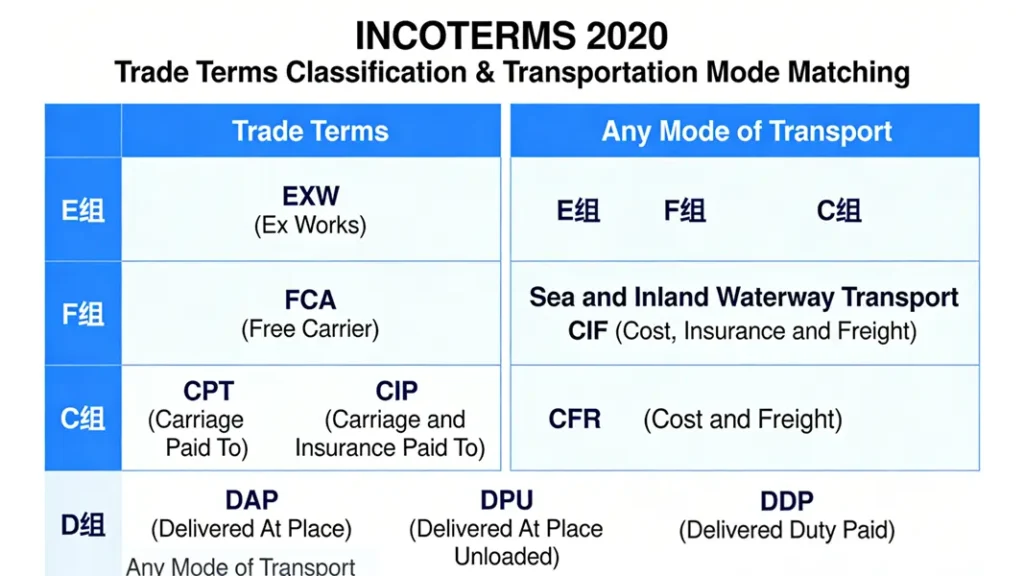
| Terminology Classification | Covering trade terms | Applicable transportation scenarios | Core features |
| Applicable to any mode of transport | EXW, FCA, CPT, CIP, DAP, DPU, DDP | Modern logistics models include container shipping, air freight, rail/road transport, and multimodal transport. | Risk transfer is based on “delivery to the carrier,” with flexible delivery locations, suitable for modern door-to-door logistics, and does not involve the definition of “ship’s rail.” |
| Applicable only to sea and inland waterway transport | FAS, FOB, CFR, CIF | Traditional port-to-port sea freight, bulk/general cargo sea freight, inland waterway transportation | Risk transfer is strongly correlated with shipside and loading operations at the port of loading, and the delivery location is limited to the port of shipment, making it only suitable for single-mode water transport. |
II. Detailed Explanation of Terms Applicable to Any Mode of Transport (7 Terms)
These terms are the mainstream choice for current cross-border trade, adaptable to all categories of modern transportation modes, and especially suitable for containerized cargo, high-value goods, and multimodal transport cargo. They clearly define the rights and responsibilities of both buyers and sellers, offering strong practical flexibility. The detailed rules are explained below with illustrations:
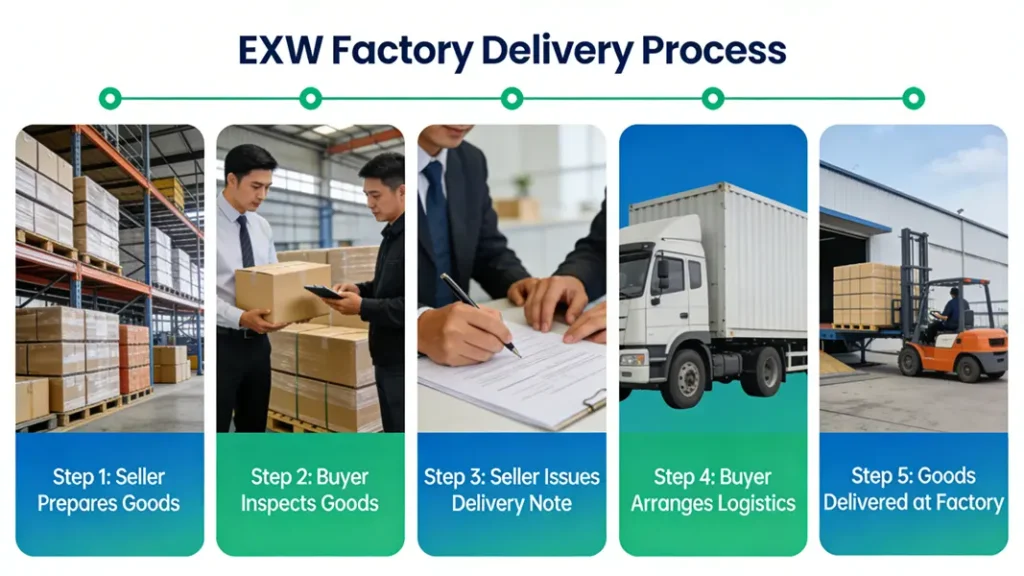
1. EXW (Ex Works) – Minimum seller liability
Core Definition : The seller fulfills its delivery obligation when it places the goods at the buyer’s disposal in its own premises (factory, warehouse, or other designated location), and is not responsible for any subsequent stages such as loading, export customs clearance, etc.
Risk Transfer Point : The risk transfers to the buyer simultaneously when the buyer or its designated carrier takes delivery of the goods.
Cost Sharing : The seller only bears the costs of preparing the goods and basic packaging; the buyer bears all subsequent costs including loading, export customs clearance, full transportation, import customs clearance, and insurance.
Practical Scenario : The buyer has mature customs clearance and logistics resources in the seller’s country and is willing to bear the risks throughout the entire process to reduce procurement costs.
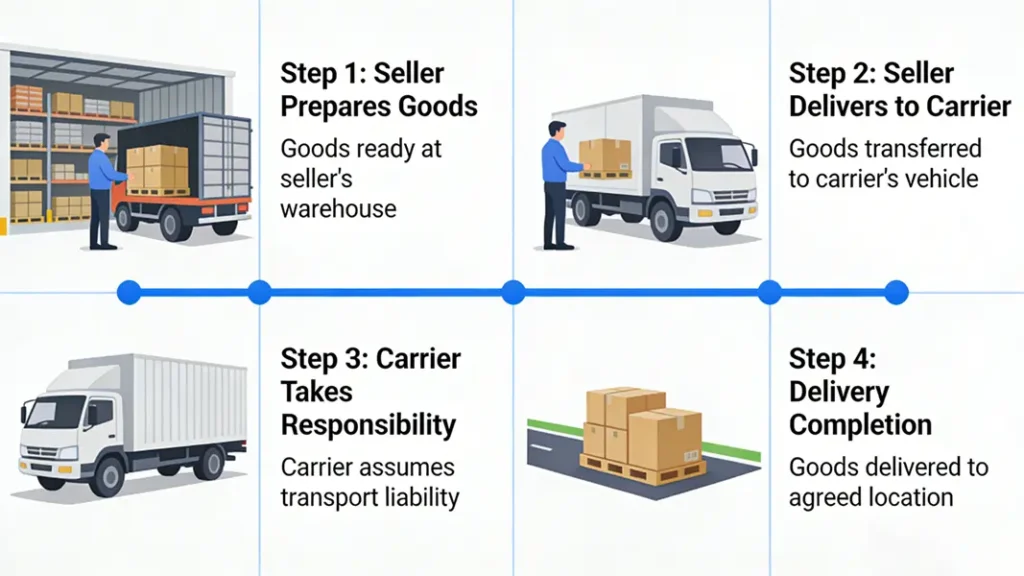
2. FCA (Free Carrier) – The Preferred Choice for Container Shipping
Core Definition : The seller fulfills its delivery obligation by delivering the goods to the carrier designated by the buyer at the named place and completing export customs clearance. This is the optimal alternative to FOB terms in container shipping.
Risk Transfer Point : Risk transfers immediately upon delivery of the goods to the carrier or its agent.
Cost Sharing : The seller bears the costs of export customs clearance and transporting the goods to the named place of delivery; the buyer bears the main freight, insurance, and import customs clearance costs.
Rule Update : INCOTERMS 2020 clarifies that both parties can agree that the buyer-designated carrier will issue an on-board bill of lading to the seller, adapting to letter of credit settlement requirements.
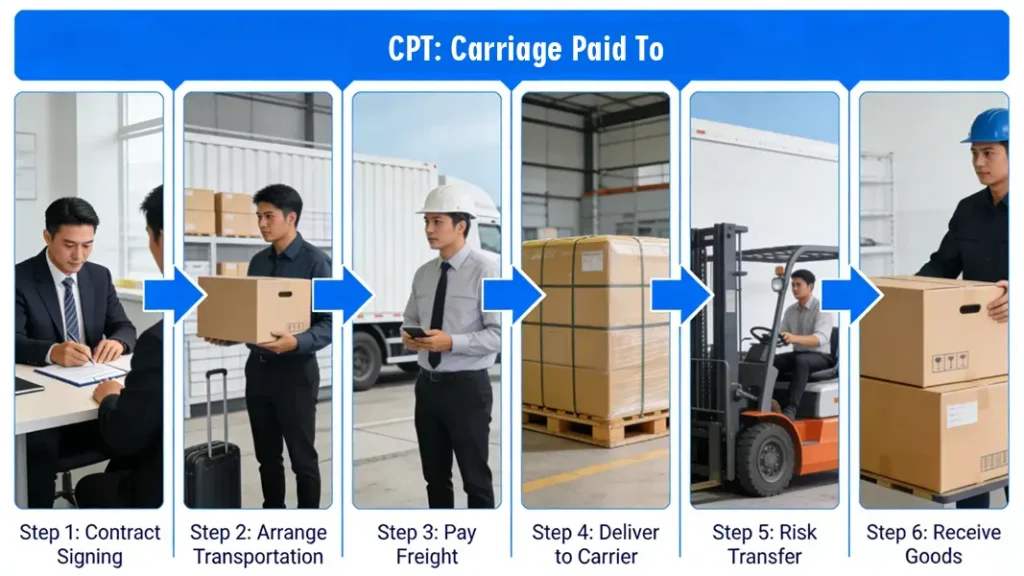
3. CPT (Cost Payable To) – Seller bears the main freight charges.
Core Definition : Based on FCA, the seller additionally bears the total cost of transporting the goods to the designated destination, but is not required to provide cargo transportation insurance.
Risk Transfer Point : Consistent with FCA, risk transfers when the goods are handed over to the first carrier, not upon arrival at the destination.
Cost Sharing : The seller bears export customs clearance, delivery to the carrier, and the total cost of transporting the goods; the buyer bears the insurance premium, import customs clearance, and taxes.
Practical Scenario : The buyer desires the seller to coordinate the main transportation环节 (link/process) and possesses independent insurance acquisition capabilities and long-term cooperative insurance resources.
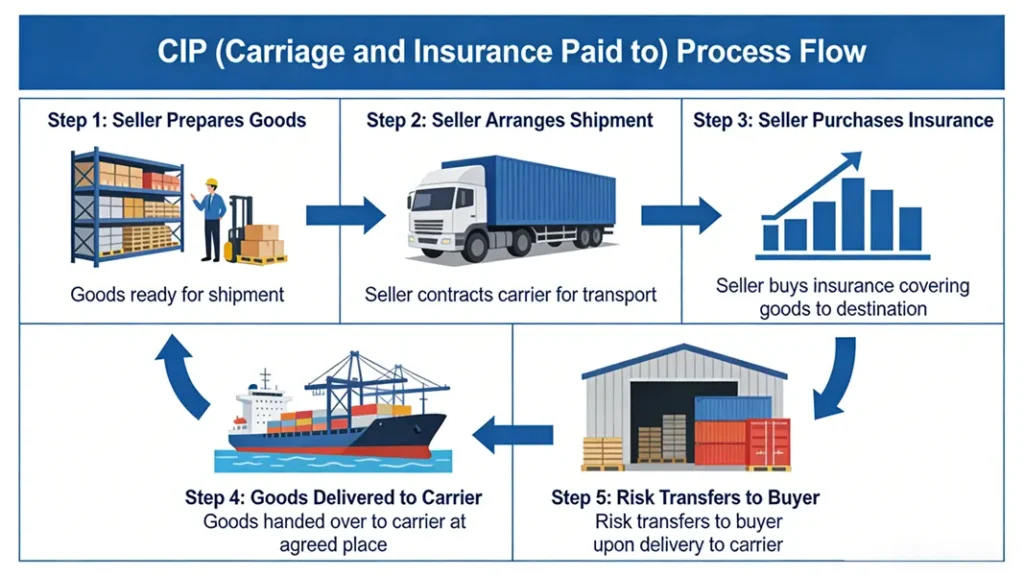
4. CIP (Cost and Insurance Paid To) – CPT + Premium Insurance
Core Definition : In addition to CPT, the seller bears the additional cost of full cargo insurance, and INCOTERMS 2020 requires the seller to purchase ICC(A) class high-level insurance (i.e., all-risk insurance equivalent), providing significantly higher protection than CIF terms.
Risk Transfer Point : When the goods are delivered to the first carrier, the risk transfers to the buyer, and the insurance covers the transferred transportation risks.
Cost Sharing : The seller bears export customs clearance, main freight, and high-level basic insurance premiums; the buyer bears import customs clearance and taxes, and can purchase additional insurance as needed.
Practical Scenario : Suitable for small and medium-sized buyers importing high-value goods who are unfamiliar with international cargo insurance and require comprehensive basic risk protection.
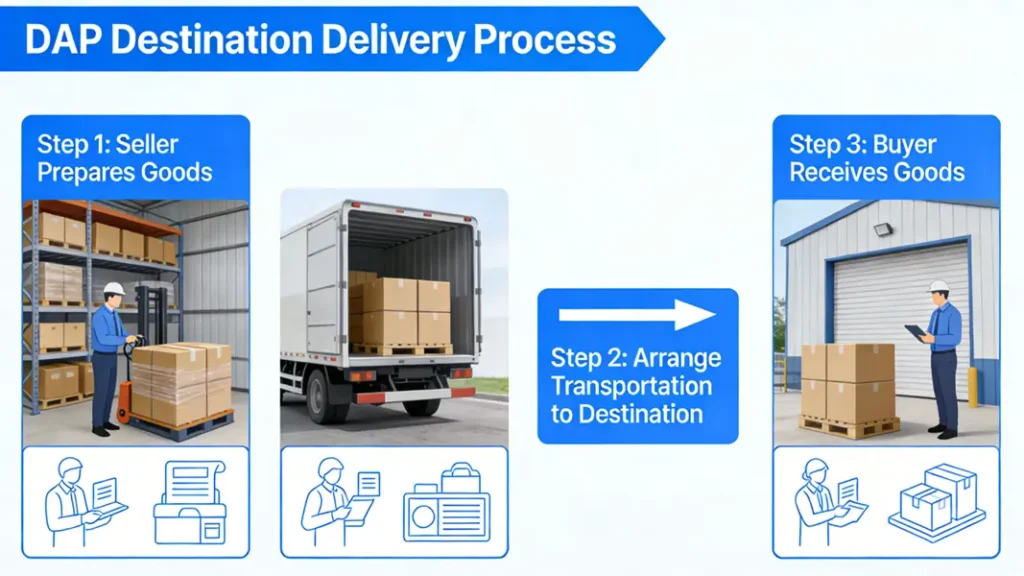
5. DAP (Delivered at Destination) – Goods awaiting unloading at the destination.
Core Definition : The seller is responsible for transporting the goods to the buyer’s designated destination. Upon arrival, the goods are handed over to the buyer in a state awaiting unloading, and the seller is not responsible for unloading or import customs clearance.
Risk Transfer Point : Risk transfers when the goods arrive at the designated destination and are handed over to the buyer.
Cost Sharing : The seller bears the costs of export customs clearance, overall transportation (including last-mile delivery), and insurance; the buyer bears the unloading costs, import customs clearance, and taxes.
Practical Scenario : The buyer has the capability to unload the goods independently, and this applies to imported large machinery and equipment, etc., for which the seller cannot independently coordinate international transportation.
6. DPU (Delivered Upon Discharge at Destination) – The sole seller is responsible for unloading.
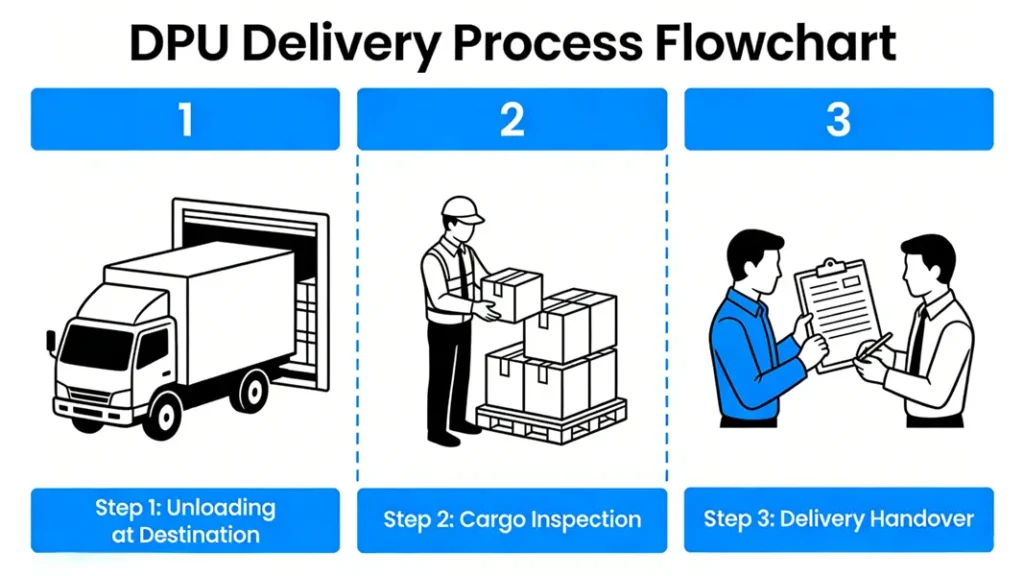
Core Definition : In INCOTERMS 2020, DAP replaces the original DAT. In addition to DAT, the seller bears the additional unloading costs at the destination. It is the only term requiring the seller to be responsible for unloading at the destination.
Risk Transfer Point : Risk transfers when the goods are unloaded at the destination and placed at the buyer’s disposal.
Cost Sharing : The seller bears export customs clearance, overall transportation, insurance, and unloading costs at the destination; the buyer bears import customs clearance and taxes.
Practical Tip : The seller needs to verify the unloading conditions at the destination in advance to avoid additional costs due to limitations in space or equipment.
7. DDP (Delivered Duty Paid) – Seller bears the highest liability.
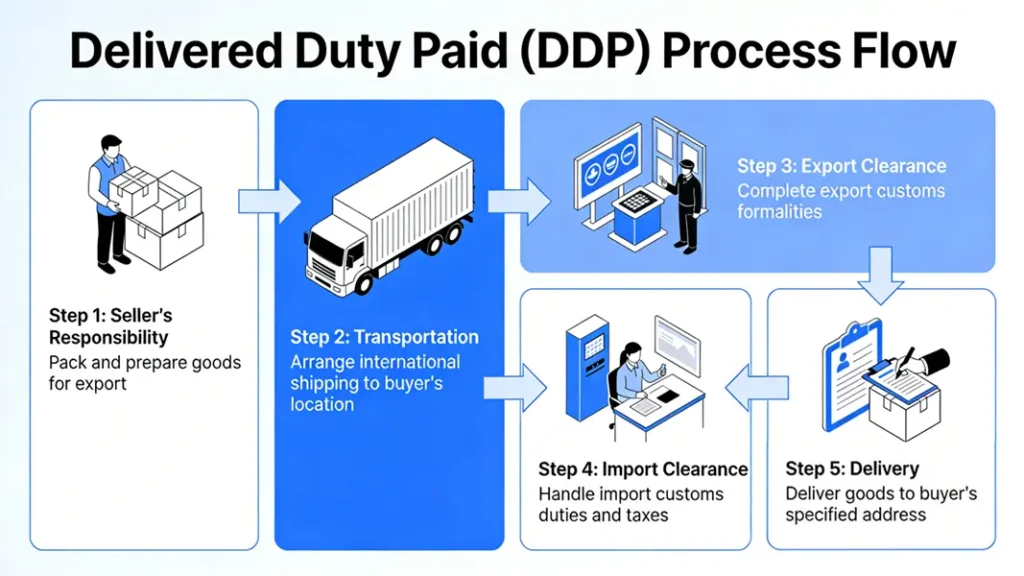
Core Definition : The seller assumes full responsibility and costs from preparation of goods to delivery to the buyer’s designated location, including all import duties, customs clearance, tariffs, and value-added tax. The buyer only needs to receive the goods.
Risk Transfer Point : Risk transfers when the goods are handed over to the buyer at the destination; the seller assumes all transportation risks.
Cost Sharing : The seller bears all costs throughout the process; the buyer only bears the storage and handling costs after receipt.
Practical Scenario : For long-term cooperative orders where the buyer lacks experience in international trade and import customs clearance, and the buyer and seller have a high degree of trust.
III. Detailed Explanation of Terms Applicable Only to Maritime and Inland Waterway Transport (4 Types)
These terms are commonly used in traditional foreign trade and are only applicable to port-to-port waterway transportation. They are mostly used for non-containerized goods such as bulk cargo and general cargo. The risk transfer is concentrated at the port of shipment. The core details are explained below with illustrations:
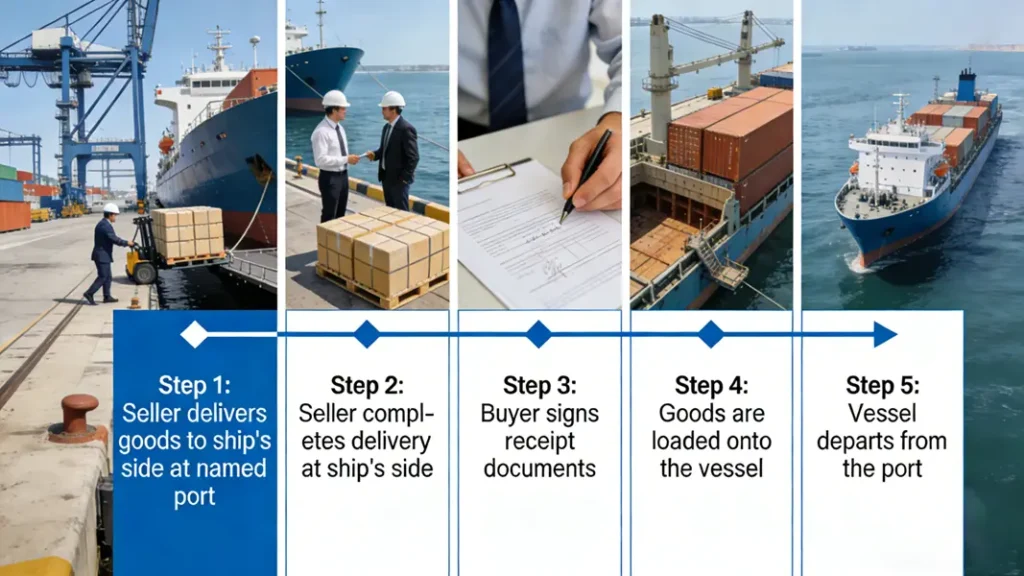
1. FAS (Free Alongside Ship)
Core Definition : The seller fulfills its delivery obligation by placing the goods alongside the vessel designated by the buyer at the designated port of shipment and completing export customs clearance.
Risk Transfer Point : The risk transfers to the buyer when the goods are placed alongside the vessel at the port of shipment; all subsequent loading and transportation risks and costs are borne by the buyer.
Practical Scenarios : Transportation scenarios involving large, overweight cargo or equipment that is difficult to load directly onto the ship and needs to be placed alongside the ship in advance for loading.
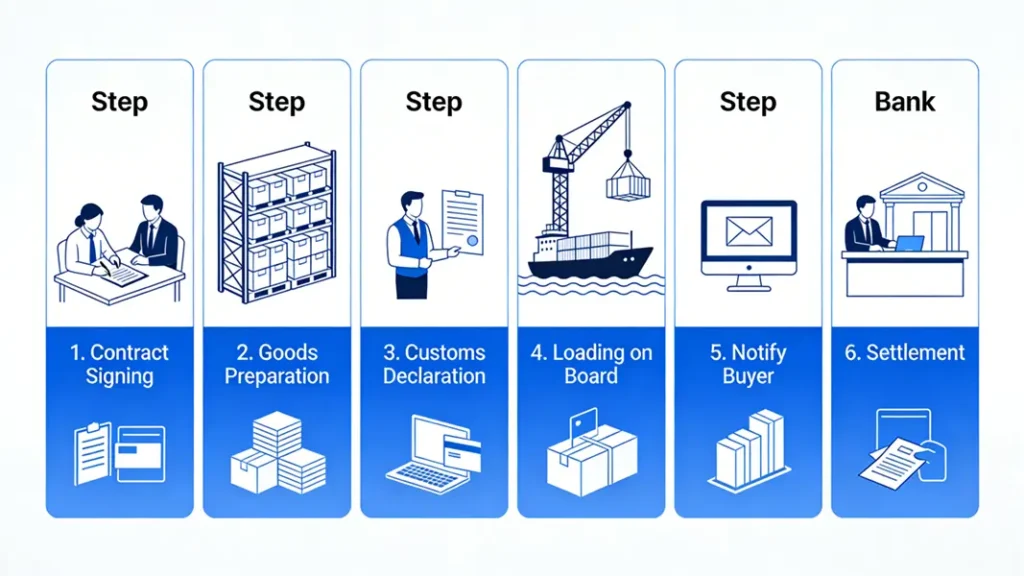
2. FOB (Free On Board) – a classic maritime term
Core Definition : The seller fulfills its delivery obligation upon loading the goods onto the vessel designated by the buyer at the designated port of shipment and completing export customs clearance. INCOTERMS 2020 clarifies that risk transfer is defined as the “actual completion of loading on board,” abandoning the vague definition of the ship’s rail.
Risk Transfer Point : Risk transfers when the goods are loaded onto the designated vessel at the port of shipment.
Cost Sharing : The seller bears the costs of export customs clearance, transporting the goods to the ship’s side, and loading; the buyer bears the ocean freight, insurance premiums, and import customs clearance costs.
Practical Scenario : Traditional port-to-port ocean freight scenarios for bulk cargo and general cargo.
3. CFR (Cost and Freight)
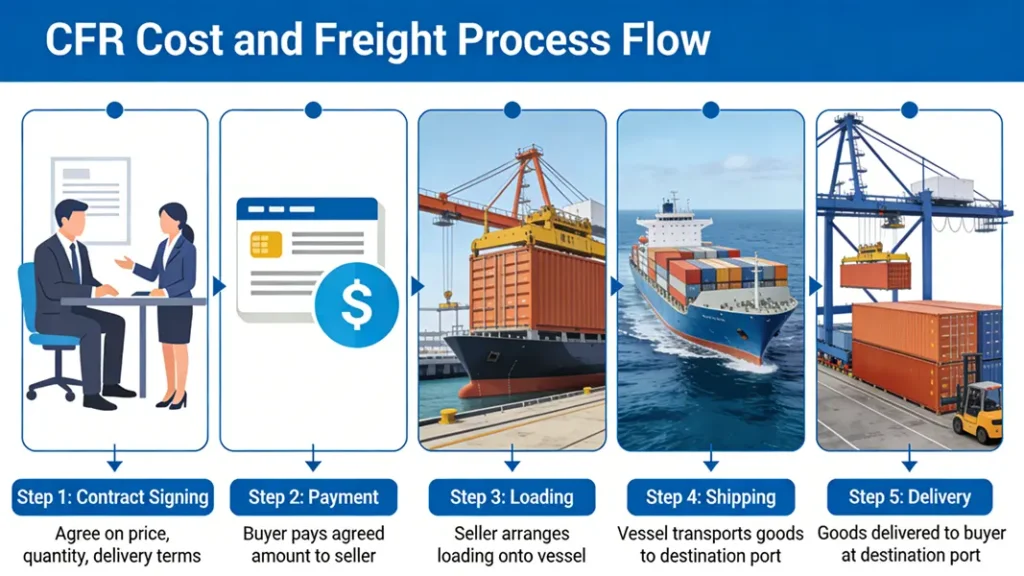
Core Definition : Based on FOB, the seller additionally bears the ocean freight to the designated port of destination, and the risk transfer point is consistent with FOB.
Risk Transfer Point : Risk transfers when the goods are loaded onto the vessel at the port of shipment. The seller is only responsible for paying freight and does not bear any risk during transit.
Cost Sharing : The seller bears export customs clearance, loading costs, and ocean freight; the buyer bears insurance premiums, import customs clearance, and taxes.
Practical Tip : After loading, the seller should promptly issue a shipping notice to the buyer to facilitate insurance coverage and avoid losses due to missed insurance.
4. CIF (Cost, Insurance and Freight)
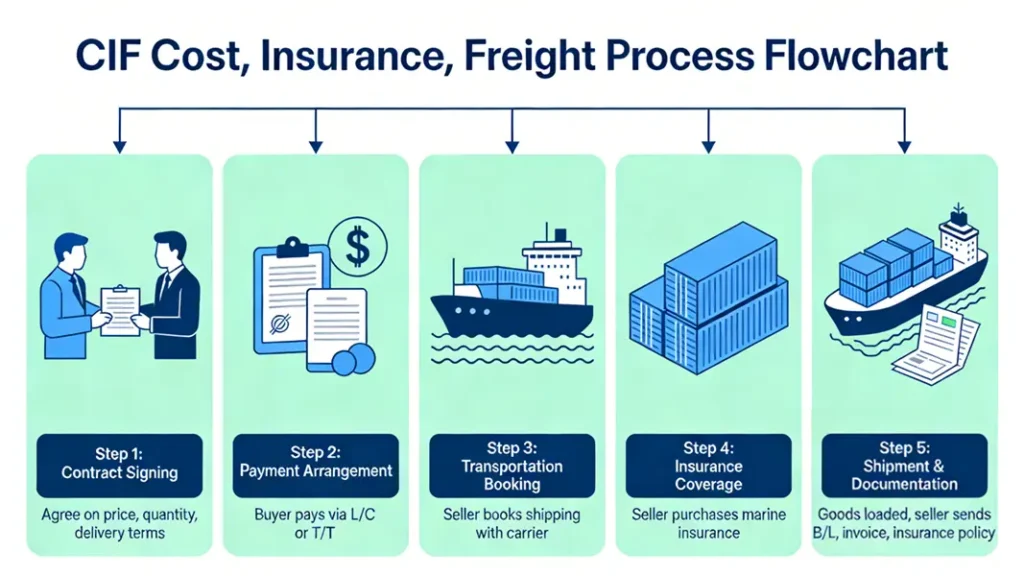
Core Definition : Based on CFR, the seller additionally bears the cargo insurance premium during sea transport, requiring only basic ICC (C) category insurance , with coverage limited to major accidents such as maritime disasters and fires.
Risk Transfer Point : Risk transfers when the goods are loaded onto the vessel at the port of shipment, not upon arrival at the port of destination.
Cost Sharing : The seller bears export customs clearance, loading costs, ocean freight, and basic insurance premiums; the buyer bears import customs clearance and taxes, and may purchase additional insurance as needed.
Practical Scenario : Traditional bulk cargo sea transport scenarios where the buyer is unfamiliar with marine insurance and the risk of cargo damage during transport is relatively low.
IV. Core Principles for Selecting Trade Terms
| The core principles for compliant selection are: first determine the mode of transport, then select the corresponding terms; clarify the boundaries of rights and responsibilities, and refine the contract terms; and align with the settlement method to avoid performance risks. |
- Prioritize matching with the mode of transport : For container shipping, air freight, and multimodal transport, use any mode of transport terminology; for traditional bulk shipping, use waterway-specific terms to avoid mismatches.
- Matching the rights, responsibilities, and capabilities of both parties : If the buyer has strong customs clearance and logistics capabilities, EXW or FCA can be selected to reduce costs; if the buyer has weak capabilities, DAP, DPU, or DDP can be selected to simplify the process.
- Closely follow the new INCOTERMS 2020 regulations : pay close attention to updates such as CIP advanced insurance requirements, FCA bill of lading agreements, and DPU terminology renaming to avoid ambiguity in the terms.
- Detailed delivery location in the contract : For flexible delivery location terms such as FCA and DAP, the contract should clearly specify the exact address to avoid disputes caused by vague descriptions.
- Suitable payment settlement methods : For letter of credit settlement, terms such as FCA, CIF, and CIP, which facilitate the acquisition of settlement documents, are preferred to ensure the security of payment receipts.
V. Conclusion
INCOTERMS 2020 trade terms are deeply integrated with actual international trade transportation scenarios. The scientific selection of terms is a core prerequisite for compliant contract fulfillment and risk control in cross-border trade. Terms applicable to any mode of transport in modern logistics offer high flexibility and wide applicability, making them the mainstream choice for current cross-border trade. Traditional terms applicable only to waterway transport provide clear definitions of rights and responsibilities, better suited to bulk cargo sea freight scenarios. Cross-border trade practitioners need to accurately grasp the core meanings, risk transfer rules, and practical points of each term, and combine them with the characteristics of the goods, mode of transport, the capabilities of both parties, and the cooperation model to select the optimal trade terms, minimizing trade risks and improving contract fulfillment efficiency.
Cooperation Consulting
Company Name : Anyang Qingda Trading Co., Ltd.
Company Address : Anyang, Henan (Possessing formal customs registration qualifications, with business covering the whole country, focusing on serving global overseas buyers, providing one-stop China procurement and foreign trade export full-process services, helping foreign trade novices to carry out export business efficiently)
Contact email : contact@qingdatrade.com
Contact us through multiple channels : phone/WeChat/WhatsApp/LINE/Telegram: +86 178 3851 0628
For inquiries, please visit our official website : https://qingdatrade.com/ (Submit your procurement needs and receive a rapid response within 8 hours. We offer customized overseas procurement and foreign trade export support solutions).
Core services : Procurement from China for global overseas buyers, export agency, international logistics coordination, professional customs declaration and clearance, practical guidance on trade terms, and full-chain support services for cross-border trade.
Key keywords : INCOTERMS 2020, International Trade Terms, Overseas Customers Purchasing from China, Foreign Trade Procurement, Export Agency, International Logistics, Customs Clearance, Cross-border Trade, Anyang Qingda Trading Co., Ltd.
Whether you are an overseas buyer looking for a reliable Chinese supplier and procurement partner, or a foreign trade novice urgently needing guidance on trade terms and assistance with export business, Anyang Qingda Trading Co., Ltd. can provide you with professional, compliant, and efficient one-stop services, accurately control trade risks, and help cross-border procurement and export business proceed smoothly!