Whether you’re launching your own children’s clothing brand, expanding your offline wholesale business, setting up an e-commerce store, or supplying supermarkets and schools, this guide will walk you through the entire process—from factory selection to final shipment. It will help you source efficiently, safely, and cost-effectively in the Anyang children’s clothing industry cluster, avoid common procurement pitfalls, and maintain firm control over product quality and delivery schedules.
Introduction: Why You Need This Guide
Every year, a large number of wholesalers, brand owners, and e-commerce sellers come to Anyang to source children’s clothing, but most fall into the same pitfalls: choosing the wrong factories, ignoring children’s clothing safety standards, encountering significant quality discrepancies between samples and bulk orders, failing to obtain compliance certifications that prevent products from being listed for sale, missing delivery deadlines that disrupt peak sales seasons, and even facing hidden price hikes or defective goods—all of which result in wasted costs and effort.
Anyang is the core children’s apparel production hub in North China. With over two decades of deep expertise in the industry, it boasts a complete industrial chain—from fabric weaving, printing, and sewing to trims, packaging, and shipping. It offers exceptional value and large-scale production capacity across categories such as infant and toddler wear, school uniforms, basic children’s apparel, and casual children’s wear, making it the premier destination for domestic children’s apparel sourcing.
However, successfully navigating this mature industrial cluster requires more than just a quick trip to a wholesale market or casual contact with a few factories. It demands systematic supplier screening, category expertise, quality control, and partnership management skills. After reading this guide, you will clearly understand: how to precisely locate children’s apparel factories in Anyang that meet your needs; how to negotiate to safeguard your profit margins; how to strictly control safety and quality before shipment; and how to ensure your children’s apparel complies with market regulations—all while achieving peace of mind, cost savings, and a stable supply chain.
I. Why Should You Source Children’s Apparel in Anyang in 2026?
The overall competitiveness of Anyang’s children’s apparel industry continues to rise, offering significant advantages to domestic buyers. These advantages are specifically reflected in the following areas:
- Significant cost advantages and exceptional value for money: Basic costs such as labor, factory space, and fabrics are far lower than in coastal children’s apparel production hubs like Guangdong and Zhejiang. Price advantages are particularly pronounced for high-volume staple items, school uniforms, and basic infant and toddler underwear. Additionally, direct local fabric sourcing eliminates intermediate transportation steps, further reducing raw material procurement costs and effectively increasing your profit margins.
- Complete industrial chain ensures stable supply: The local ecosystem is fully equipped. From cotton fabrics, elastic bands, buttons, and zippers to eco-friendly dyes, safety-certified accessories, and packaging materials, all are supplied by local manufacturers. This eliminates the risk of material shortages or production halts. Sample production is fast, production cycles are predictable, and supply efficiency is guaranteed even during peak seasons.
- Flexible production capacity to accommodate all order types: Factories are clearly tiered by scale, capable of handling small-batch trial orders of just a few hundred pieces—ideal for new sellers stocking up or testing new designs—as well as large-scale orders in the millions, suitable for supermarket supply, school bulk purchases, and brand-scale production. Within the same industrial park, capacity can be flexibly allocated to meet sudden order demands.
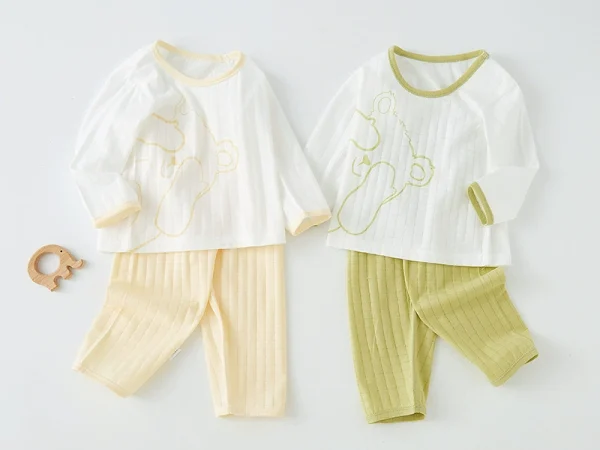
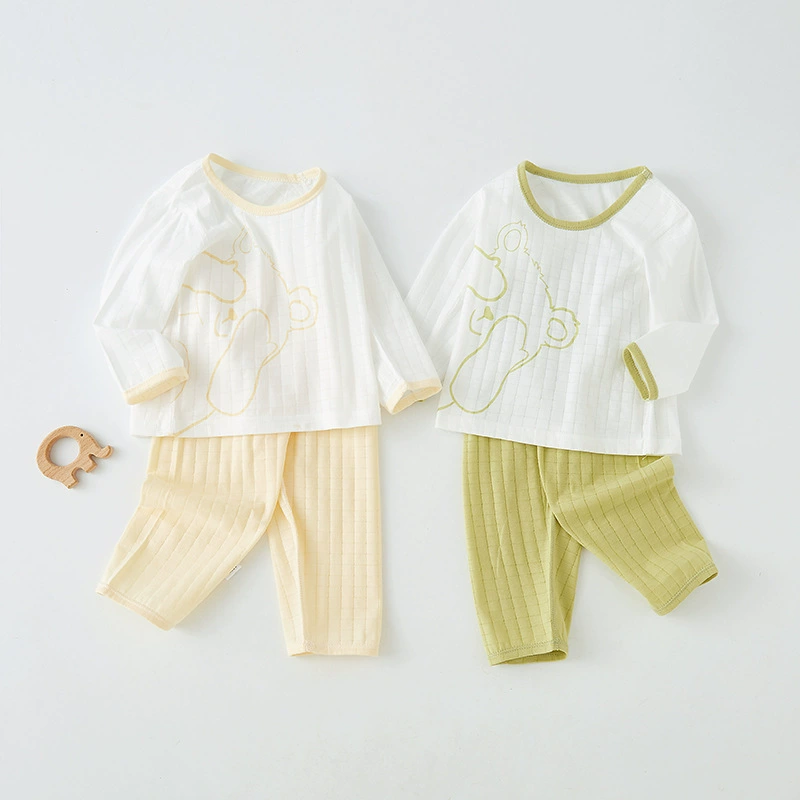
- Comprehensive product range for hassle-free sourcing: We cover children’s apparel for all ages from 0 to 16, including mainstream categories such as infant and toddler onesies, underwear, loungewear, casual sets, school uniforms, lightweight outdoor wear, and knit jackets. You can source all your merchandise in one stop right here in Anyang, eliminating the need to travel to multiple locations.
- Mature safety controls that meet national standards: Leading factories have specialized in children’s apparel production for many years and are well-versed in domestic safety regulations. They have established production and quality inspection processes addressing critical safety details such as anti-strangulation, anti-pulling, skin-friendly materials, and the absence of sharp edges. The children’s apparel produced generally meets national safety standards and is suitable for various domestic sales channels.
Friendly Reminder: Before contacting factories, be sure to clearly define your target sales channel—whether it’s offline wholesale, e-commerce retail, or supplying schools and supermarkets. Different channels have varying requirements for quality, certifications, and pricing, which directly determine the direction of your subsequent factory selection.
II. Map of Anyang’s Children’s Apparel Industry Clusters and Core Production Areas
Anyang’s children’s apparel industry is highly clustered. By categorizing these areas based on their regional focus and product tiers, you can quickly identify your target production zones and avoid wasting time visiting factories at random:
Core Production Areas
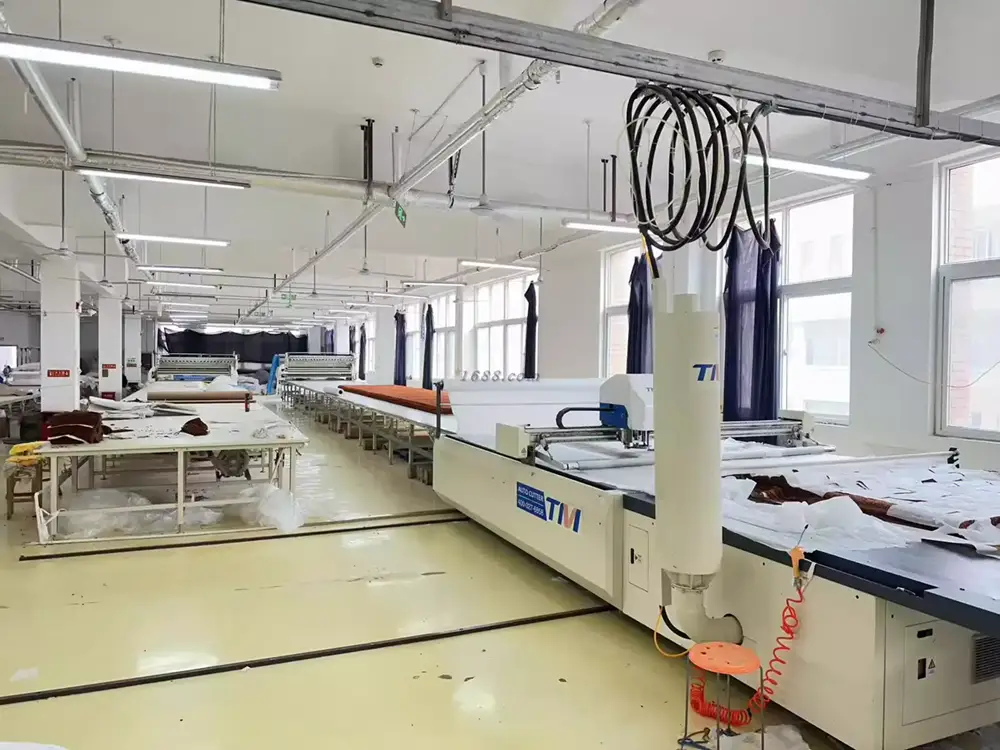
- Anyang Textile Industrial Park: The core production area for mid-to-high-end children’s apparel, specializing in skin-friendly clothing for infants and toddlers, organic cotton children’s wear, custom-branded school uniforms, and children’s apparel exclusively supplied to retail chains. Most factories here are large, standardized facilities with complete certifications and strict quality control, making them ideal for buyers seeking high-quality, compliant products.
- Tangyin County Children’s Apparel Industrial Cluster: A major production hub for high-volume children’s apparel, specializing in casual wear, sportswear, basic outerwear, and affordable children’s clothing. Factories here have ample OEM capacity and mature production lines, offering lower unit prices. This area is ideal for large-volume wholesale orders seeking high cost-effectiveness.
- Hua County Children’s Apparel Accessories and Support Base: Focuses on children’s apparel accessories production, small-batch customization, and semi-finished product processing. Ideal for buyers needing personalized accessories, quick turnaround on small orders, and order fulfillment services. Comprehensive support services and high restocking efficiency.
Factory Tier Classification: Choose Wisely to Avoid Pitfalls
- Category 1 Factories: Large, Standardized Facilities: These large-scale factories feature standardized workshops, comprehensive quality control systems, and full children’s apparel certifications. With standardized production processes and higher MOQs (500–3,000 pieces per style), they offer consistent quality and delivery times, making them suitable for brand owners, supermarket bulk buyers, and major wholesalers.
- Category 2 Factories: Medium-Sized Specialized Children’s Apparel Factories: Focus on 1–2 niche categories, such as infant underwear or school uniforms. They offer a balance of value and flexibility, with basic safety and quality inspection processes. MOQ: 200–500 pieces. Suitable for small and medium-sized brands, brick-and-mortar stores, and e-commerce sellers.
- Category 3 Factories: Small workshops: Extremely low MOQs, with some as low as 50 pieces. Suitable for initial prototyping and small-batch trial production. However, production equipment is rudimentary, quality is inconsistent, and there are no formal certifications. We do not recommend partnering with these factories for mass production to avoid issues such as defective products or safety non-compliance.
III. Working Directly with Factories vs. Working with Trading Companies: Which Model Is Right for You?
Children’s clothing involves strict safety requirements and numerous product details. The choice of partnership model directly impacts procurement costs, product quality, and after-sales risks. By considering your order volume and available resources, selecting the right model will save you time and effort:
Working directly with children’s clothing factories in Anyang
Key Advantages: Lower unit prices with no middleman markups; full transparency throughout the production process, allowing direct communication with production managers to oversee quality and safety details; greater room for price negotiation after establishing long-term partnerships, with priority scheduling during peak seasons.
Ideal for: Buyers with a certain order volume, knowledge of children’s apparel quality control, and sufficient time to coordinate with factories. Suitable for clients seeking long-term, stable supply and placing large-volume orders.
Points to Note: You must independently screen factories, verify credentials, monitor production, and arrange inspections. Initial coordination requires more time and is best suited for those with some procurement experience.
Procurement Through Local Trading Companies/Supply Chain Service Providers
Key Advantages: One-stop access to a wide range of product categories without the need to visit factories yourself; suitable for small-batch purchases, with the option to combine orders to meet minimum order quantities; most trading companies have their own QC teams to assist with initial quality control; straightforward coordination and more convenient after-sales communication.
Ideal for: Novice buyers, clients with small order volumes, those without time to visit factories, and customers looking to quickly stock their shelves; suitable for initial product testing and small-batch restocking.
Points to Note: There will be a markup; some trading companies may outsource production. Be sure to verify product quality and confirm sourcing channels before partnering.
Recommended Procurement Strategy: Beginners should first use trading companies to familiarize themselves with the Anyang children’s apparel market and test product sales. Once volume increases, switch to direct purchasing from core factories to reduce procurement costs. Alternatively, adopt a hybrid model: source core bestsellers directly from factories while using trading companies for trial orders of new styles.
IV. The Complete Process for Purchasing Children’s Clothing in Anyang: From Connecting with Factories to Shipping—Every Step Covered
Following a standardized procurement process helps minimize risks, ensures product quality and on-time delivery, and makes it easy even for beginners to get started:
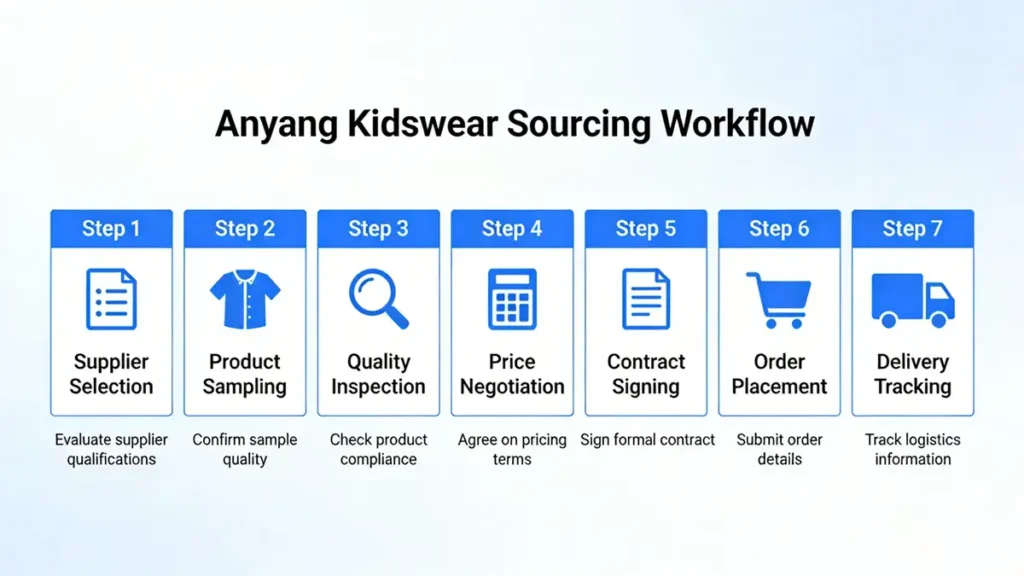
Step 1: Define the Children’s Clothing Purchase Requirement Document
Clearly outline your requirements in advance to avoid repeated design revisions and communication errors later on. Be sure to specify the following: product category (infant/toddler wear, school uniforms, casual wear), age group, size range, fabric requirements, safety standards, order quantity, target unit price, packaging requirements, and delivery time. The more detailed your specifications, the higher the efficiency of the collaboration.
Step 2: Screen Potential Partner Factories
Use channels such as Alibaba, Made-in-China.com, local industry trade shows, recommendations from industry peers, and on-site visits to industrial clusters to screen 5–10 factories that match your product category and scale. Give priority to manufacturers with physical production facilities and experience producing similar products.
Step 3: Verify Factory Credentials
Review the factory’s business license, children’s clothing production qualifications, past quality inspection reports, and relevant certification documents. Examine case studies of their clients. If possible, conduct an on-site factory inspection to assess the production environment, quality control processes, and warehouse conditions to confirm the factory’s capabilities.
Step 4: Sample Production and Approval
Request the factory to produce samples according to your requirements. Focus on verifying sample quality: fabric softness, smooth stitching without fraying, fastener and zipper durability, comfort of elastic bands, colorfastness, and wash resistance. Once confirmed, retain the pre-production sample as the standard for inspecting the bulk order. Typically, 1–2 rounds of sampling are sufficient to finalize the design.
Step 5: Commercial Negotiations and Contract Signing
Clearly define the minimum order quantity, unit price, payment terms (the standard practice in Anyang is a 30% deposit plus 70% paid in full prior to shipment), production timeline, packaging standards, inspection criteria, post-sale compensation clauses, and safety liability agreements. Ensure all terms are explicitly stated in writing in the contract to eliminate any reliance on verbal agreements.
Step 6: Issuing the Formal Purchase Order
Issue a formal purchase order, including detailed technical specifications, safety standards, and sample references. Confirm order details with the factory’s production manager—do not rely solely on the sales representative—to ensure precise execution on the production side.
Step 7: Production Monitoring and Multiple Rounds of Inspection
Monitor progress as needed during production. Focus on conducting three rounds of inspections—pre-production, in-production, and pre-shipment—with a strict focus on safety and quality. If issues are discovered, promptly require the factory to rectify them. Ensure all issues are resolved before shipment to avoid post-sale disputes.
Step 8: Product Acceptance and Logistics Shipping
Conduct an on-site inspection of the bulk shipment prior to dispatch. After confirming that the products match the samples, are free of defects, and pose no safety hazards, settle the final payment and arrange for logistics pickup. Retain the quality inspection report and delivery receipt for future after-sales support and reorders.
V. High-Growth Children’s Apparel Categories Worth Investing In for 2026
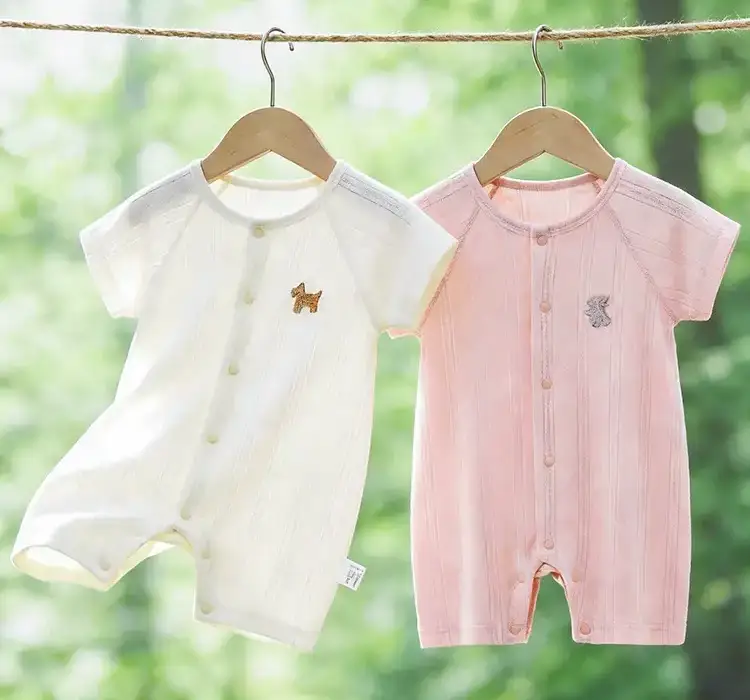
Based on domestic children’s apparel consumption trends, the following product categories in the Anyang industrial cluster demonstrate stable sales and high profit margins; we recommend prioritizing investment in these areas:
1.Category A Skin-Friendly Clothing for Infants and Toddlers
Parents place a high priority on the safety and comfort of their children’s clothing. Category A 100% cotton underwear, onesies, sleep sacks, and loungewear for children aged 0–3 are essential bestsellers with high repurchase rates. Leading factories in Anyang have mature production processes and meet quality standards, ensuring that products will sell well.
2.Children’s School Uniforms and Campus Attire
With the widespread adoption of standardized school uniforms across China, there is strong demand for uniforms from kindergartens and elementary schools. This sector offers high customization potential, low competition, and stable profits. Factories in Anyang possess the capacity for large-scale, standardized production, ensuring fast delivery and designs that meet campus requirements, making this a reliable long-term supply category.
3.Stretchy and Soft Casual Children’s Apparel
Versatile casual sets, T-shirts, and sweatpants are year-round bestsellers. Comfortable, durable, and appealing to a wide audience, these items benefit from Anyang’s well-established local supply chain for stretch fabrics, ensuring controllable costs and patterns tailored to children’s body shapes. They are ideal for both offline wholesale and e-commerce distribution.
4.Lightweight Outdoor Children’s Apparel
With the rise of family outings and outdoor activities, demand for lightweight outdoor children’s apparel—such as quick-dry T-shirts, sun-protective jackets, lightweight waterproof windbreakers, and breathable athletic pants—has surged. These items combine practicality with comfort and offer higher profit margins than standard basics. Factories in Anyang have established dedicated production lines for this category, ensuring quality that meets market demands.
VI. How to Choose Fabrics for Children’s Clothing: Safety, Comfort, and Compliance Are Key
The fabrics used in children’s clothing directly impact a child’s wearing experience and health. When selecting fabrics, keep in mind the principle of “safety first, comfort second, and durability third.” Here are some commonly used high-quality fabrics in the Anyang industrial cluster:
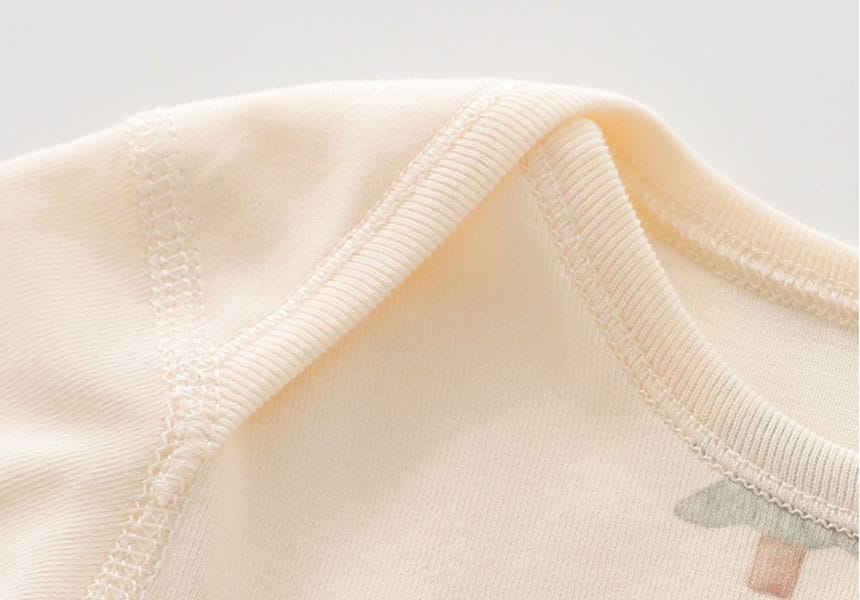
- Natural, Skin-Friendly Fabrics (Top Choice for Infants and Toddlers): 100% cotton, combed cotton, organic cotton, bamboo fiber, etc. These fabrics are soft, breathable, and non-irritating, making them ideal for next-to-skin wear and infant/toddler clothing. They must comply with Class A national standards, be formaldehyde-free, odor-free, and meet colorfastness requirements.
- Stretch functional fabrics (top choice for everyday wear): Cotton-spandex blends, modal, and breathable quick-dry fabrics. These offer good elasticity, durability, and resistance to deformation, making them suitable for casual and athletic children’s wear as well as everyday outfits. They resist fading and pilling after washing.
- Outerwear-Specific Fabrics (Top Choice for Outerwear): Washed cotton, fleece, anti-pilling knits, and lightweight waterproof fabrics. These fabrics are soft to the touch without being stiff, allowing children to move freely. They undergo non-toxic, eco-friendly treatments and are suitable for spring, autumn, and winter jackets and vests.
Key Reminder: For all fabrics, you must require the factory to provide official test reports verifying key indicators such as formaldehyde content, pH value, azo dye content, and colorfastness to prevent substandard fabrics from entering the supply chain.
VII. OEM vs. ODM: How to Choose a Production Model?
Most children’s clothing factories in Anyang support both production models, allowing you to choose flexibly based on your brand strategy and order requirements:
OEM (Original Equipment Manufacturing)
You provide the children’s clothing design drawings, patterns, brand logos, and specific production requirements, and the factory manufactures strictly according to your standards. This is suitable for buyers with their own brands, design capabilities, and a desire for product differentiation. It offers strong control over the product and allows for the creation of exclusive styles, but requires upfront design costs and is best suited for clients with an established brand foundation.
ODM (Original Design Manufacturing)
The factory provides existing, proven styles. You simply select a pattern, modify the brand logo, adjust colors, and make minor detail changes to sell the items under your own brand. No in-house design is required; prototyping is fast, costs are low, and new products can be launched quickly. This is suitable for new sellers, stock-based wholesalers, and clients looking to test styles rapidly, significantly reducing trial-and-error costs.
VIII. Quality Control for Children’s Apparel: Safety Standards and Key Inspection Points
When inspecting children’s apparel, safety must be the top priority. Focus on the following key areas to ensure that defective or unsafe products are eliminated:
- Structural Safety: Buttons, zippers, and drawstrings must be secure and not come loose. Children’s clothing for children under 3 years old must not contain small accessories or long drawstrings. There must be no sharp edges, burrs, or rough edges. Elastic bands must be appropriately tight and not constrict the child’s body.
- Stitching and Craftsmanship: Stitches must be even and tight, with no loose threads, skipped stitches, or frayed edges. No exposed thread ends to prevent scratching or irritating the child’s skin; seams must be flat and smooth.
- Fabric and Appearance: The production fabric must match the pre-production sample exactly, with no color discrepancies, stains, holes, or odors. Prints and embroidery must be secure and not peel off, and the fabric must not pill or snag.
- Sizing and Fit: Sizes must conform to standards with no deviations. The cut should accommodate children’s growth patterns, allowing for appropriate ease so that the garment fits comfortably and does not restrict movement.
- Care Labels and Tags: Clearly indicate safety category (Class A/B/C), fabric composition, washing instructions, and manufacturer information. Use soft labels on undergarments to prevent skin irritation.
- Packaging: Use non-toxic, eco-friendly packaging that eliminates the risk of suffocation from small plastic bags. Items should be packaged by category with clear labeling to facilitate inventory management and sales.
Practical Recommendations: For infant and toddler clothing, conduct full inspections of all key safety items. For general children’s apparel, perform visual and quality inspections using the industry-standard AQL 2.5. Firmly reject non-compliant goods and require the factory to rework or replenish the shipment.
IX. Essential Certifications for Children’s Apparel: The Key to Opening Up Market Channels
To sell children’s apparel domestically, compliance certifications are mandatory, especially when entering e-commerce platforms, supermarkets, and school channels. Certification serves as an essential prerequisite, and all legitimate factories in Anyang can provide the relevant qualifications:
- GB 31701-2015 “Technical Specifications for the Safety of Textile Products for Infants and Children”: This is a mandatory national standard for children’s apparel in China, categorized into Class A (infant and toddler products, ages 0–3), Class B (products in direct contact with the skin), and Class C (products not in direct contact with the skin). It serves as the core proof of product compliance.
- OEKO-TEX® Standard 100: An internationally recognized textile safety certification commonly used for high-end children’s apparel and supermarket supply in China. It certifies that the clothing is free of harmful chemicals, enhancing product competitiveness.
- GOTS Organic Certification: A certification exclusive to organic cotton children’s apparel, targeting high-end organic clothing for infants and children, and meeting the demands of high-end consumers.
- ISO 9001 Quality Management System Certification: Demonstrates a factory’s standardized production and quality control capabilities. Major manufacturers generally possess this certification, ensuring consistent product quality.
X. 7 Common Pitfalls in Anyang Children’s Apparel Sourcing and Solutions to Avoid Them
- Pitfall 1: Failure to meet safety standards, rendering products unsellable: Solution—Clarify national standard requirements in advance, specify safety responsibilities in the contract, request third-party test reports before bulk shipment, and refuse acceptance of non-compliant goods.
- Pitfall 2: Excessively high minimum order quantities (MOQs) that exceed the budget: Solution—Reduce the number of styles and colors, consolidate orders for the same style, arrange for staggered deliveries, negotiate joint production, and lower the MOQ threshold for the first order.
- Pitfall 3: High-quality samples, but mass production suffers from color discrepancies, deformation, and defects: Solution—Retain sealed samples; stipulate in the contract that mass production must match the samples; verify fabrics and trims before production; monitor quality control during production to prevent cutting corners.
- Pitfall 4: Delivery delays during peak season, affecting sales: Solution — Allocate a 20%–30% buffer in production time; secure 2–3 key factories for peak season to avoid reliance on a single supplier; place orders and schedule production well in advance.
- Pitfall 5: Hidden price hikes, resulting in excessive procurement costs: Solution — Require the factory to provide a detailed quotation listing all costs, including fabric, trims, processing, packaging, and shipping, to prevent arbitrary price increases later on.
- Pitfall 6: Slow Reorder Processing and Stockouts Affecting Sales: Solution — Select factories with sufficient capacity and high responsiveness; submit reorder plans in advance; reserve capacity for bestsellers; and improve reorder efficiency.
- Pitfall 7: No After-Sales Guarantee and No One to Handle Defective Goods: Solution — Clearly define after-sales compensation clauses in the contract; specify responsibilities for replacing defective goods and rework; retain proof of cooperation; and pursue legal accountability if issues arise.
XI. Strategies for Building a Long-Term, Stable Supply Chain for Children’s Apparel in Anyang
- Streamline suppliers and focus on key partnerships: Retain 2–3 complementary factories (e.g., one each for infant/toddler wear, school uniforms, and casual wear) to reduce coordination costs, facilitate centralized quality control, and strengthen bargaining power.
- Submit Order Plans in Advance: Provide partner factories with quarterly and annual purchase forecasts to allow them to prepare materials and schedule production in advance. This not only secures better purchase prices but also ensures priority supply during peak seasons.
- Maintain Long-Term Partnerships: Settle payments on time, clarify purchasing standards, and address issues through rational communication to build trust with factories. When production or quality issues arise, factories will be more proactive in resolving them.
- Leverage local supply chain resources: Partner with factories to connect with fabric and accessory suppliers, further reducing procurement costs, ensuring raw material quality, and improving supply stability.
Conclusion: Build Your Competitive Edge in Children’s Apparel Starting with the Supply Chain
The children’s apparel market is fiercely competitive today. To gain a firm foothold, the key lies in effectively managing two critical areas: the supply chain and quality compliance. As a mature children’s apparel industrial hub, Anyang offers excellent value for money, a complete industrial chain, and standardized production, making it the preferred partner for domestic children’s apparel buyers. It can accommodate both small-batch prototyping and large-scale production runs.
Successful children’s apparel procurement is never about finding the cheapest factory; rather, it involves establishing a comprehensive system encompassing “factory selection—prototyping—production—quality control—after-sales service,” always prioritizing children’s safety and mitigating risks through standardized processes.
The children’s apparel market is fiercely competitive today. To gain a firm foothold, the key lies in effectively managing two critical aspects: the supply chain and quality compliance. As a mature children’s apparel industrial hub, Anyang—with its high cost-effectiveness, complete industrial chain, and standardized production—is the preferred partner for domestic children’s apparel buyers, capable of handling both small-batch prototyping and large-scale distribution.
Successful children’s apparel sourcing is never about finding the cheapest factory; rather, it involves establishing a comprehensive system encompassing “factory selection—prototyping—production—quality control—after-sales service,” always prioritizing children’s safety and mitigating risks through standardized processes.
By mastering the practical techniques in this guide, you can efficiently connect with high-quality suppliers in the Anyang children’s apparel cluster, secure high-quality, cost-effective, compliant, and marketable children’s clothing, steadily build your own supply chain, and effortlessly capture market share in the children’s apparel sector.
Partner Recommendation: Anyang Qingda Trading Co., Ltd.—A One-Stop Service Provider for Professional Children’s Apparel Sourcing and Foreign Trade Export
With years of deep roots in the Anyang children’s apparel industry cluster, Anyang Qingda Trading Co., Ltd. leverages mature local supply chain resources to specialize in end-to-end services covering children’s apparel wholesale procurement, OEM/ODM manufacturing, and foreign trade export agency. Whether you are a domestic wholesaler, brand owner, cross-border newcomer, or overseas buyer, we can tailor supply solutions to address challenges throughout the entire children’s apparel procurement and export process, helping buyers navigate the market with ease and unlock its potential.
Our Core Advantages
- Robust Sourcing Network: Directly connected to standardized children’s apparel factories in Anyang, we cover the full range of categories including Class A infant and toddler clothing, school uniforms, casual children’s wear, and light outdoor children’s apparel. As a direct supplier with no middlemen markups, we ensure controllable quality and stable delivery schedules, supporting both small-batch trial orders and large-scale customization.
- Comprehensive International Trade Services: We hold official customs registration credentials, serve clients nationwide, and support global buyers. We specialize in the entire export process—including customs clearance, logistics, document processing, and compliance certification—empowering beginners to enter international trade with zero prior experience and effortlessly expand into overseas markets.
- Strict Quality Control: We have an in-house professional QC team that strictly adheres to the GB 31701 safety standard. We oversee the entire process—from fabric verification and production monitoring to final shipment inspection—to eliminate defective or non-compliant products, ensuring every batch of children’s apparel meets standards and sells well.
- Personalized Service: We support custom orders based on your samples, private label manufacturing, and mixed-lot purchases. We adjust patterns, fabrics, and packaging to meet your needs, provide one-on-one support throughout the process, and offer prompt after-sales responses to resolve any concerns regarding procurement and export.
Company Profile
- Company Name: Anyang Qingda Trading Co., Ltd.
- Company Address: Anyang, Henan (Business coverage across China; serving global overseas buyers; supporting newcomers to international trade)
- Website: https://qingdatrade.com
- Contact Email: contact@qingdatrade.com
- One-Stop Contact Information: Phone / WeChat / WhatsApp / LINE / Telegram: +86 178 3851 0628
Business Partnerships: If you have any needs related to product procurement, contract manufacturing, or international trade and exports, please feel free to contact us at any time to discuss opportunities. We will match you with the right resources to meet your specific needs and work together to succeed in overseas markets!