
In international trade transactions, clear and standardized trade terms and compliance with customs declaration procedures are essential for ensuring smooth export of goods and efficient execution of cross-border trade.Anyang Qingda Trading Co., Ltd. is a professional foreign trade enterprise with formal customs registration credentials. Based in Anyang, Henan, our operations extend nationwide, serving overseas buyers globally. Leveraging standardized operational procedures and extensive hands-on foreign trade experience, we provide precise trade guidance and efficient customs clearance support to global partners, ensuring the compliant, stable, and seamless advancement of all cross-border trade activities.
I. Four Core International Trade Terms and Their Practical Application
Standardized international trade terms clearly delineate the division of rights and responsibilities, cost allocation, and risk transfer points between buyers and sellers. They serve as the core basis for signing trade contracts and conducting quotation negotiations. The following outlines the four most widely used terms in foreign trade scenarios, presented in clear and straightforward language to facilitate precise business matching and risk avoidance for global merchants.
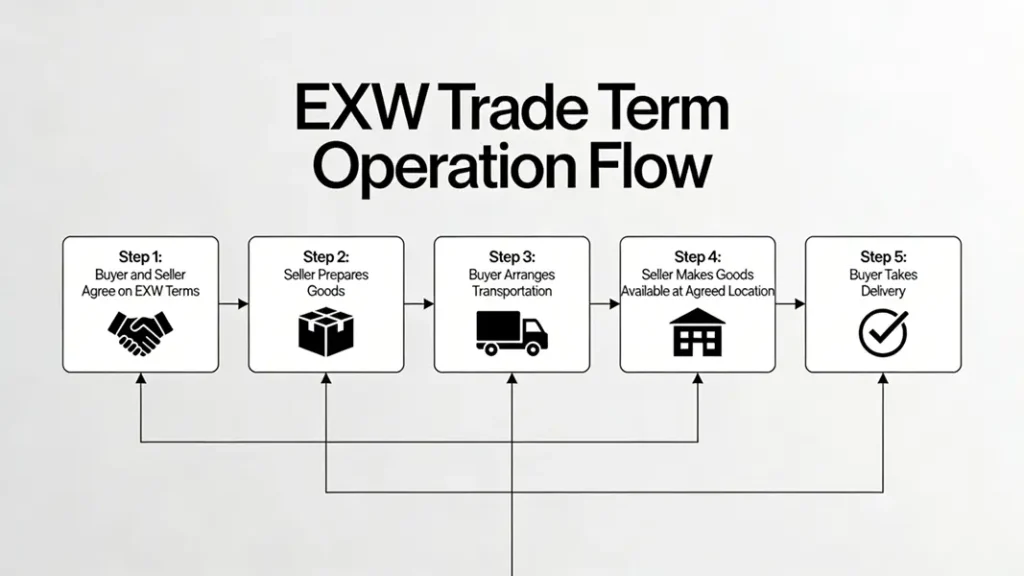
1. EXW (Ex Works)
EXW is the most basic trade term with the simplest allocation of rights and responsibilities and the clearest cost accounting. It also serves as the benchmark reference for foreign trade quotations. Under this term, the seller is only required to prepare the goods at the factory or designated warehouse within the agreed timeframe. The buyer is solely responsible for the entire process, including picking up the goods, domestic transportation, export customs clearance, international logistics, and customs clearance in the destination country. Once the goods leave the warehouse, all risks are simultaneously transferred to the buyer.
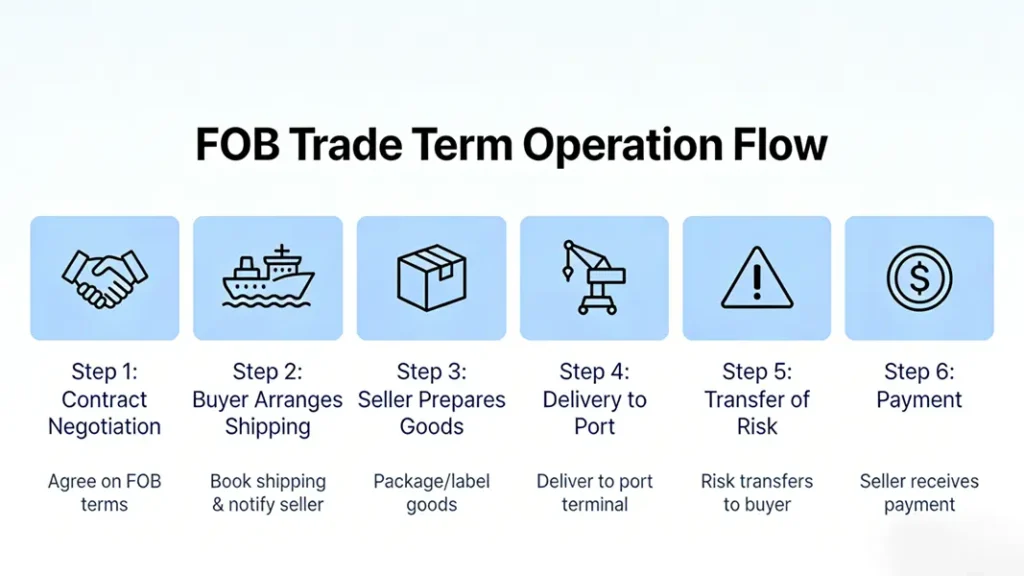
2. FOB (Free on Board)
FOB is an extremely common transaction method in cross-border trade. The seller is responsible for transporting the goods to the designated domestic port of shipment and completing loading operations. Risk formally transfers to the buyer once the goods cross the ship’s rail.The seller is solely responsible for domestic export customs clearance, including handling compliance procedures and submitting complete customs documentation. The buyer assumes full responsibility for chartering vessels, booking cargo space, paying ocean freight, purchasing cargo insurance, and managing destination customs clearance and duties. This mature operational model suits exports of bulk and conventional goods.
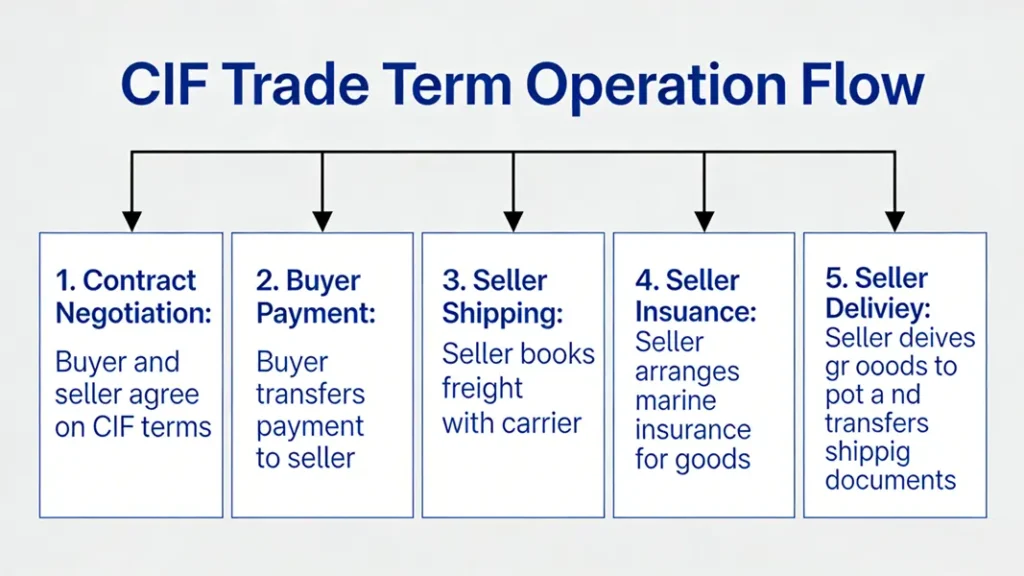
3. CIF (Cost, Insurance, and Freight)
The CIF term extends beyond FOB. Beyond loading the goods and handling export customs clearance, the seller additionally covers ocean freight and cargo insurance costs to the destination port. The point of risk transfer remains consistent with FOB, occurring when the goods cross the ship’s rail at the port of shipment.Under this term, the seller maintains full control over domestic logistics and ocean freight operations, significantly enhancing cargo transportation management and optimizing the overseas customer experience. It is the preferred transaction model for B2B international trade.
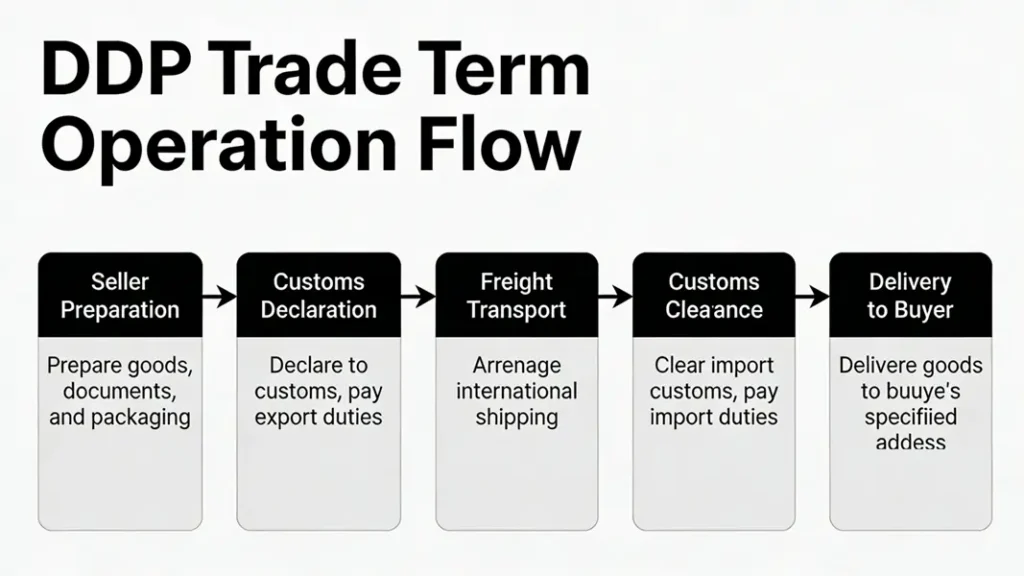
4. DDP (Delivered Duty Paid)
DDP represents the trade term with the heaviest seller responsibility, functioning as a one-stop, door-to-door, all-inclusive transaction model.The seller bears full responsibility for all costs and risks throughout the entire process: from preparing goods at the factory, handling domestic export customs clearance, managing international logistics, and completing import customs clearance in the destination country, to delivering the goods to the buyer’s designated location after paying all applicable taxes and duties. This model suits overseas buyers lacking customs clearance capabilities who seek hassle-free delivery, significantly enhancing cooperation convenience and showcasing the seller’s professional service capabilities.
II. Detailed Explanation of Mainstream Customs Clearance Models and Compliance Implementation Key Points
Compliant customs clearance is a core component of international trade. Different clearance models suit distinct trade scenarios and must be selected precisely based on business type, goods attributes, and tax refund requirements. This ensures clearance efficiency while mitigating compliance risks, facilitating swift and smooth goods movement across borders.
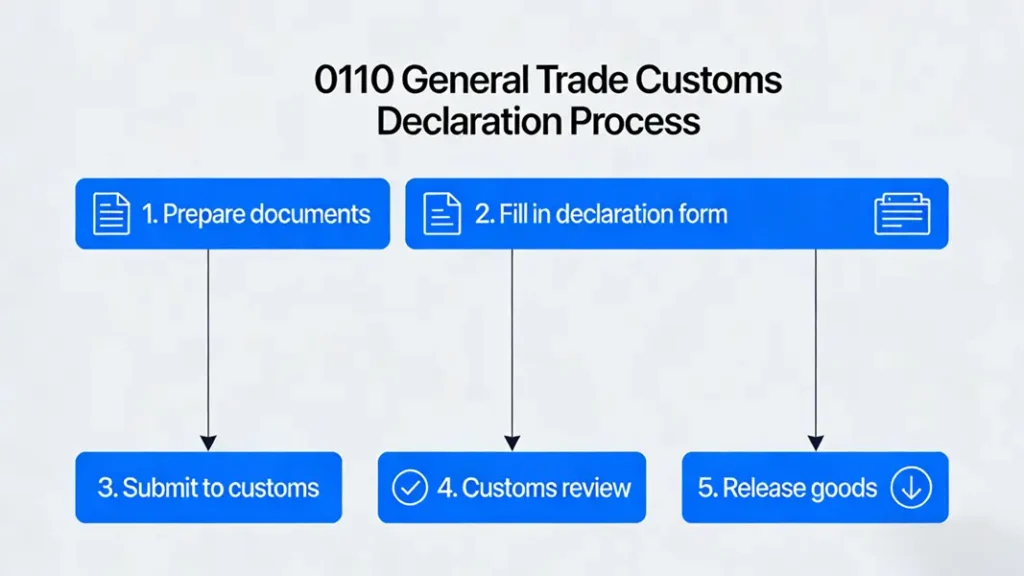
1. 0110 General Trade Customs Declaration
This is the most mainstream and compliant customs declaration model in traditional foreign trade. It applies to bulk B2B goods exports and formal purchase-sales trade operations. Complete documentation—including purchase contracts, commercial invoices, packing lists, and VAT invoices—must be provided. This model supports standard export tax rebate processing, features standardized procedures, and offers broad applicability, making it the preferred choice for long-term, stable foreign trade collaborations.
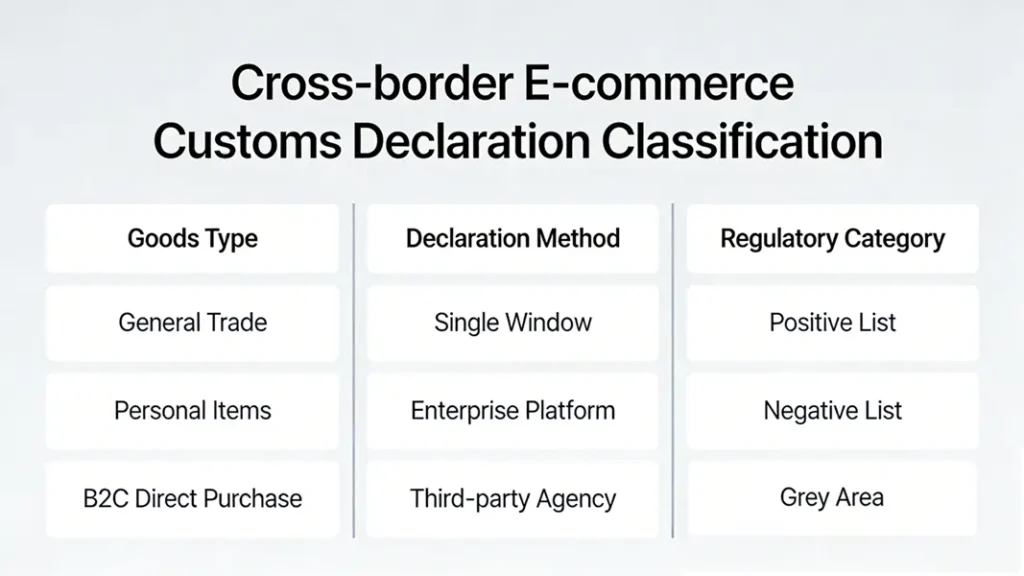
2. Cross-Border E-Commerce Dedicated Declaration Modes
For cross-border e-commerce B2B and retail orders, the primary classifications are: 9610 Cross-border E-commerce Retail Export 9710 Cross-border E-commerce B2B Direct Export 9810 Cross-border E-commerce Export to Overseas Warehouses These models leverage online transaction data to streamline declaration procedures, enhancing clearance efficiency. They accommodate new trade scenarios like cross-border platform orders and overseas warehouse inventory management, balancing convenience with compliance while aligning with digital cross-border trade trends.
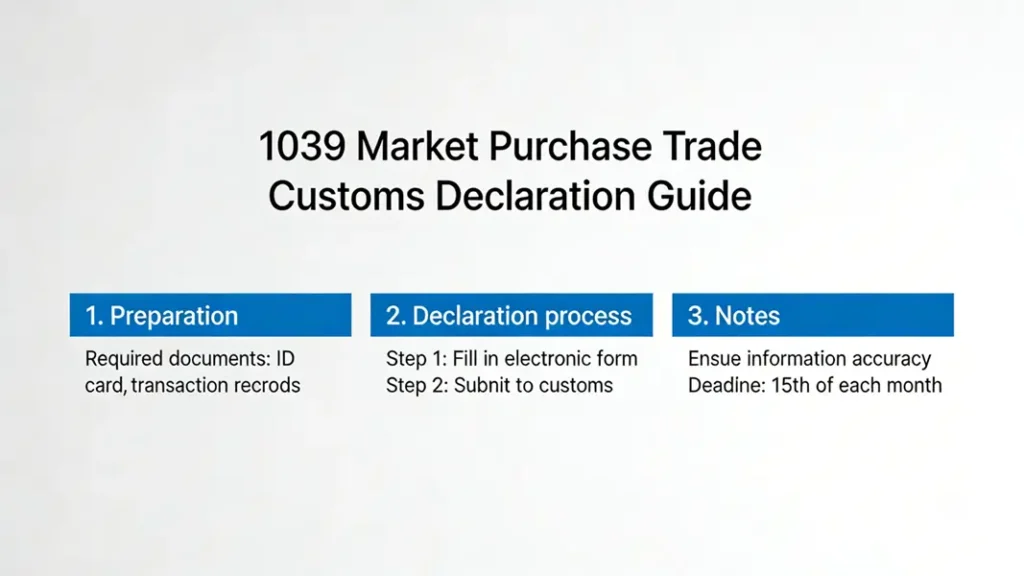
3. 1039 Market Procurement Trade Declaration
Specifically designed for exporting diverse, small-batch, and frequent shipments of loose goods, this declaration implements tax exemption without refund and simplified declaration procedures. It offers flexible foreign exchange collection processes, accommodating exports of small commodities and daily necessities without invoices. With straightforward operations and rapid customs clearance, it facilitates efficient implementation of small-to-medium volume foreign trade operations.
III. Contact Information Summary
Company Name: Anyang Qingda Trading Co., Ltd.
Address: Anyang, Henan (Nationwide coverage, serving global overseas buyers with formal customs registration credentials)
Official Email: contact@qingdatrade.com
Omni-Channel Contact: Phone / WeChat / WhatsApp / LINE / Telegram: +86 178 3851 0628
Keywords: International Trade Terms; EXW/FOB/CIF/DDP; Foreign Trade Customs Declaration; 0110 General Trade; Cross-Border E-Commerce Customs Declaration; 1039 Market Procurement; Export Clearance; Anyang Qingda Trading Co., Ltd.